
Are Motorized Blinds Worth the Cost in 2026?
- WINDOWCOVERINGWIZARD
- Jul 2
- 8 min read
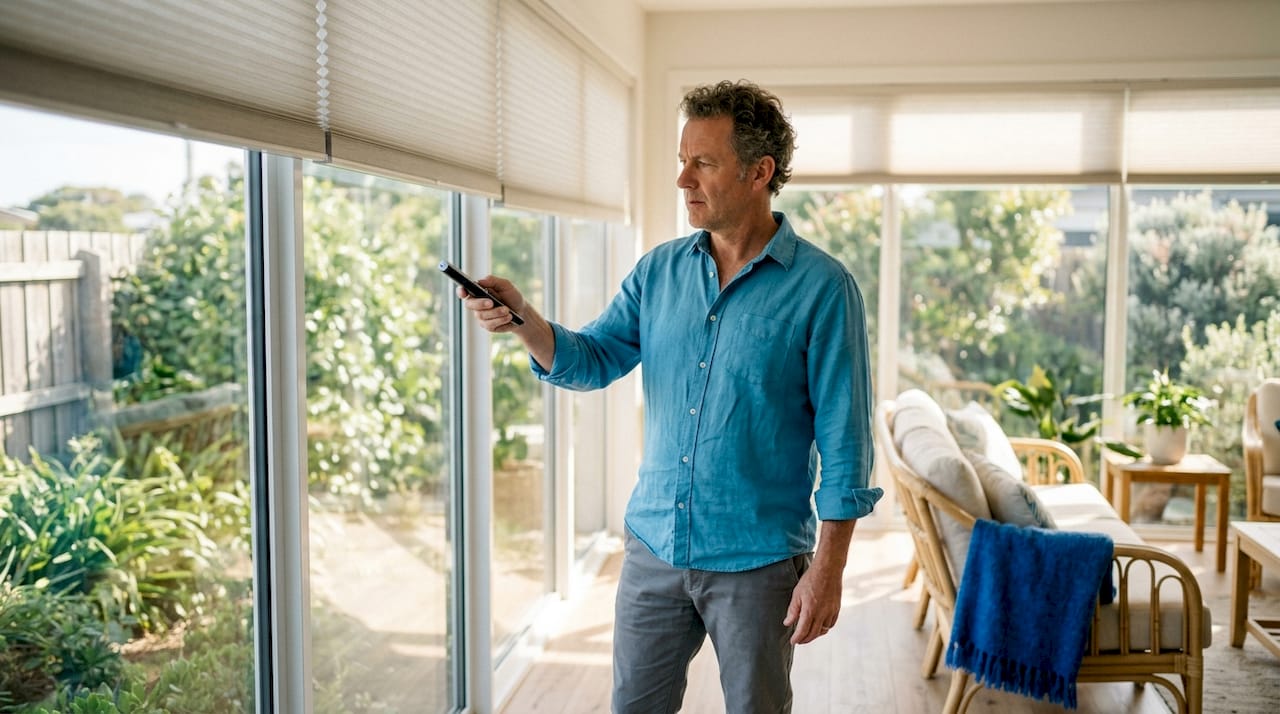
Motorized blinds are window treatments controlled by a motor rather than a manual cord or wand, and for many homeowners and renters, they are worth the cost when installed selectively. The price premium runs 40–60% above manual blinds, with total installation costs often landing between $400 and $1,500 per window. That number sounds steep until you factor in automated energy savings, child safety compliance, and the daily convenience of adjusting every shade in your home from one app. The real question is not whether motorized blinds worth the cost is a valid concern. The real question is where and how you install them.
What are the primary benefits of motorized blinds for homeowners?
Convenience is the most immediate benefit. You can control every shade in your home through an app, a remote, or a voice command via Amazon Alexa, Google Home, or Apple HomeKit. That matters most for skylights, tall windows, and windows tucked behind furniture where reaching a cord is genuinely awkward. Soft-stop precision motors operate up to 15 decibels quieter than older motorized systems, so adjustments during a meeting or a movie go unnoticed.
Energy savings are the second major driver. Automated shading systems reduce cooling demand by up to 30% and heating demand by 14% by managing sunlight exposure throughout the day. Honeycomb cellular shades paired with motorization push those numbers further, cutting winter heat loss by up to 46%. A south-facing living room that bakes in the afternoon sun is exactly the scenario where a scheduled shade drop at 2 p.m. pays for itself over time.
Safety is a benefit that often gets overlooked until it matters. Motorized blinds eliminate hazardous cords entirely, and as of 2024, the US and Canada have banned corded window coverings in new installations. Cordless operation removes strangulation risks for children and pets without sacrificing any light control functionality.
Security is the most underappreciated advantage. Automated schedules mimic occupancy by opening and closing shades while you are away. A house that looks lived-in is a meaningful deterrent, and no manual blind can replicate that behavior on a timer.
Convenience: App, remote, or voice control for every window, including hard-to-reach skylights and tall windows
Energy savings: Scheduled adjustments cut cooling costs by up to 30% and heating costs by 14%
Safety: Cordless design meets the 2024 US and Canada cord ban for new installations
Security: Automated schedules simulate occupancy to deter intruders
Accessibility: Motorized blinds remove physical effort barriers for elderly occupants and those with mobility challenges
Pro Tip: Schedule your south and west-facing shades to close automatically between noon and 4 p.m. in summer. That single automation can noticeably reduce your air conditioning load without any daily effort.
How to evaluate the costs of motorized blinds
The base cost of motorization adds $125–$300 per window on top of the shade itself. Battery and rechargeable motors sit at the lower end of that range, typically $125–$200 per shade. Hardwired motors run $175–$250 per shade before electrician fees, which add another $200–$500 depending on your home’s wiring. Total installed costs per window commonly fall between $400 and $1,500.
Smart home integration adds another layer of expense that many homeowners miss during budgeting. A hub or bridge for Wi-Fi and voice control costs $50–$150 extra and is required for most app-based or voice-activated systems. That cost is a one-time purchase shared across all your motorized shades, so it becomes less significant the more windows you motorize.
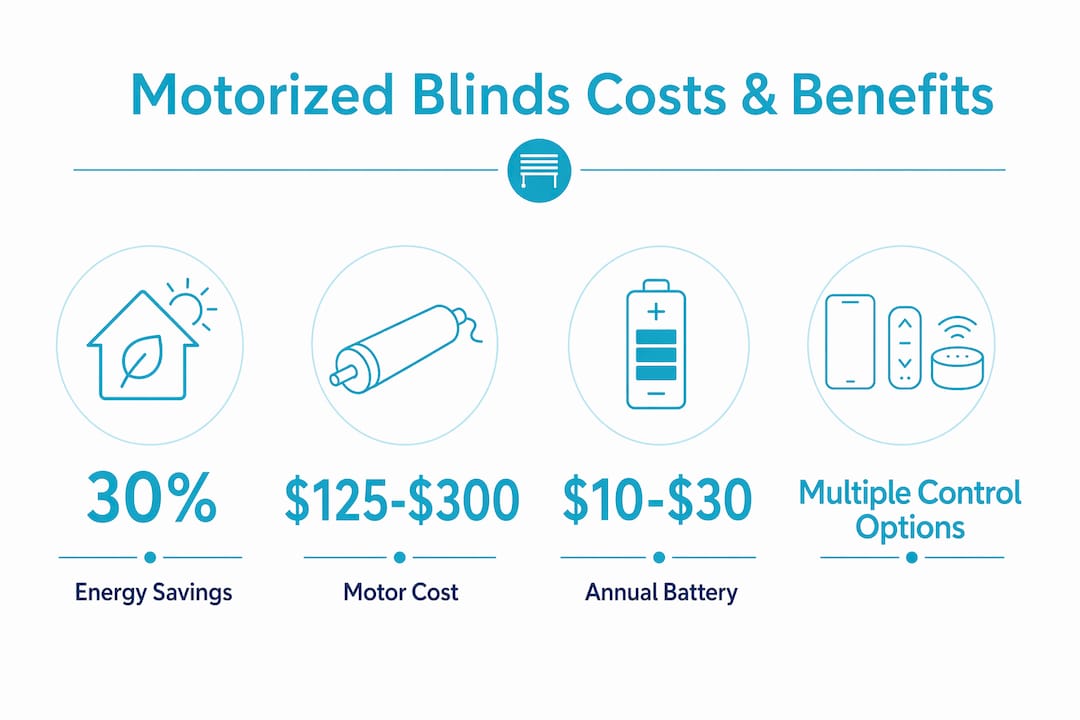
Ongoing costs are modest. Battery-powered shades typically cost $10–$30 per year per shade in battery replacements or recharging. Rechargeable models often use a USB wand, making the process simple. Hardwired systems have no ongoing power cost beyond the electricity draw, which is negligible.
Motor type | Typical cost per shade | Installation | Ongoing cost |
Battery-powered | $125–$200 | DIY-friendly | $10–$30/year |
Rechargeable | $125–$200 | DIY-friendly | Minimal (USB charge) |
Hardwired | $175–$250 | Professional required | Near zero |
Solar-powered | $150–$250 | DIY or professional | Near zero |
Pro Tip: If you are not ready to commit to hardwiring, start with rechargeable motors. They deliver the same app and voice control experience at a lower upfront cost and zero electrician fees.
Which windows benefit most from motorized blinds?
The best value approach is selective motorization. Motorize the windows where automation genuinely changes your daily experience, and leave the rest manual. That strategy cuts your total spend significantly while capturing most of the lifestyle benefit.
The windows that deliver the highest return are:
Skylights and clerestory windows: Physically difficult to reach and often the biggest heat gain culprits
Windows behind furniture: Sofas, beds, and desks block easy cord access
Large south and west-facing windows: These drive the most cooling load and benefit most from scheduled shading
Bedroom windows: Automated blackout shades improve sleep quality without fumbling in the dark
Home office windows: Glare control on demand without interrupting your workflow
Rooms where you adjust blinds multiple times a day are strong candidates. Living rooms and home offices typically top that list. A bathroom window you adjust once a week is not worth motorizing.
Integrating motorized blinds into an existing smart home system like Alexa, Google Home, or HomeKit multiplies their value. You can tie shade schedules to sunrise and sunset times, link them to a thermostat, or include them in a “leaving home” scene that closes everything at once. That level of automation is where the investment value really compounds.
Pro Tip: Walk through your home and note every window where you either skip adjusting the blinds because it is inconvenient or adjust them more than twice a day. Those are your motorization candidates.
How to install and maintain motorized blinds
Installation method depends entirely on the motor type you choose. Battery and rechargeable models are genuinely DIY-friendly. The motor mounts inside the headrail just like a standard blind, and pairing it to an app takes about five minutes. Professional installation for hardwired systems typically costs $75–$150 per window and requires an electrician for the wiring work. Most homeowners find the professional route worthwhile for hardwired installs to avoid wall patching and code compliance issues.
Measure carefully before ordering. Motorized shades are custom-made. An incorrect measurement means a return and a weeks-long delay.
Install the mounting brackets first. Test the fit before attaching the motorized headrail to confirm clearance for the motor housing.
Pair the motor to your remote or hub. Follow the manufacturer’s pairing sequence exactly. Most systems use a short button press to enter pairing mode.
Set upper and lower limits. Every motor requires limit programming so the shade stops at the correct open and closed positions. This step prevents fabric damage.
Connect to your smart home hub. Add the bridge or hub to your Wi-Fi network, then link it to Alexa, Google Home, or HomeKit through the respective app.
Test all automations before finalizing. Run your scheduled scenes during setup to confirm timing and direction before you rely on them daily.
Routine maintenance is minimal. Dust the fabric regularly with a soft brush or low-suction vacuum. Check battery levels every six months for battery-powered models. Rechargeable motors typically show a low-battery indicator in the app before they stop working, giving you time to charge without any disruption. For professional installation guidance on more complex setups, consulting a specialist avoids the most common wiring and limit-setting mistakes.
The most common mistake homeowners make is motorizing every window at once. Over-motorizing drives up costs without proportional benefit. The second most common mistake is forgetting to budget for the smart hub, which is required for voice and app control on most systems.
Key takeaways
Motorized blinds deliver real value when installed selectively on high-use or hard-to-reach windows, with energy savings, safety compliance, and smart home integration compounding the return over time.
Point | Details |
Cost premium is real but manageable | Motorization adds $125–$300 per window; selective installation controls total spend. |
Energy savings justify the upgrade | Automated shading cuts cooling demand by up to 30% and heating demand by 14%. |
Safety compliance is now mandatory | The 2024 US and Canada cord ban makes cordless motorized blinds the required standard for new installs. |
Smart hub costs are easy to overlook | Budget an extra $50–$150 for the hub or bridge needed for app and voice control. |
Selective motorization delivers the best return | Prioritize skylights, hard-to-reach windows, and high-traffic rooms for maximum daily impact. |
My honest take on motorized blinds after years in the field
The homeowners who feel the most satisfied with motorized blinds are never the ones who motorized everything. They are the ones who thought carefully about which windows actually frustrated them and solved exactly those problems. A skylight in a two-story foyer that nobody ever adjusts because it requires a ladder? That is a motorization no-brainer. A bathroom window you tilt once a week? Leave it manual and save the money.
The energy savings argument is real, but it takes time to show up on a utility bill. What you feel immediately is the convenience. Waking up and having your bedroom shades rise automatically at 7 a.m. is a small thing that turns out to matter more than you expect. The same goes for the security benefit. Most people do not think about occupancy simulation until they come home from a two-week vacation and realize their house looked lived-in the entire time.
The cost-versus-benefit calculation also shifts depending on your smart home setup. If you already have Alexa or Google Home running in your home, adding motorized shades to that ecosystem costs almost nothing extra in terms of setup complexity. The hub pays for itself in the first year of convenience. If you are starting from scratch with no smart home devices, factor that hub cost into your first-window budget so it does not catch you off guard.
My recommendation is to start with two or three windows where the impact will be immediate and obvious. Live with them for a month. You will know quickly whether you want to expand the system or whether the manual blinds in the rest of your home are perfectly fine.
— Dave
How Brandywineblinds can help you get motorized blinds right
Choosing the right motor type, fabric, and smart integration for your home takes more than a product page. Brandywineblinds brings over 30 years of experience to every consultation, helping homeowners and renters identify exactly which windows will benefit most and which motor system fits their budget and smart home setup.

Brandywineblinds handles everything from measurement to installation, with professional fitting that avoids the limit-setting and wiring mistakes that plague DIY installs. Their motorized cellular shades combine energy efficiency with quiet precision motors, and their motorized window treatments span every style from solar shades to Roman shades. Every installation comes with a lifetime service warranty. Contact Brandywineblinds for a free in-home consultation and get a custom quote built around your windows, not a generic price list.
FAQ
Are motorized blinds worth it for renters?
Motorized blinds are worth it for renters who choose battery or rechargeable models, since these require no hardwiring and can move with you. The upfront cost is recoverable across multiple homes.
How much do motorized blinds cost per window?
Total installed costs typically range from $400 to $1,500 per window, depending on motor type, shade material, and whether professional installation is required.
Do motorized blinds work without a smart home system?
Yes. Most motorized blinds work with a handheld remote out of the box. A smart hub or bridge is only needed if you want app control, voice commands, or automated scheduling.
How long do batteries last in motorized blinds?
Battery-powered motors typically need recharging or replacement once a year, costing $10–$30 per shade annually. Rechargeable models use a USB wand and take about two hours to reach full charge.
Can motorized blinds integrate with Alexa or Google Home?
Most motorized blind systems integrate with Alexa, Google Home, and Apple HomeKit through a compatible hub or bridge, enabling voice commands and inclusion in smart home scenes.
Recommended
Comments