
Express Blind Installation: Fast Setup for Any Home
- WINDOWCOVERINGWIZARD
- 2 days ago
- 8 min read
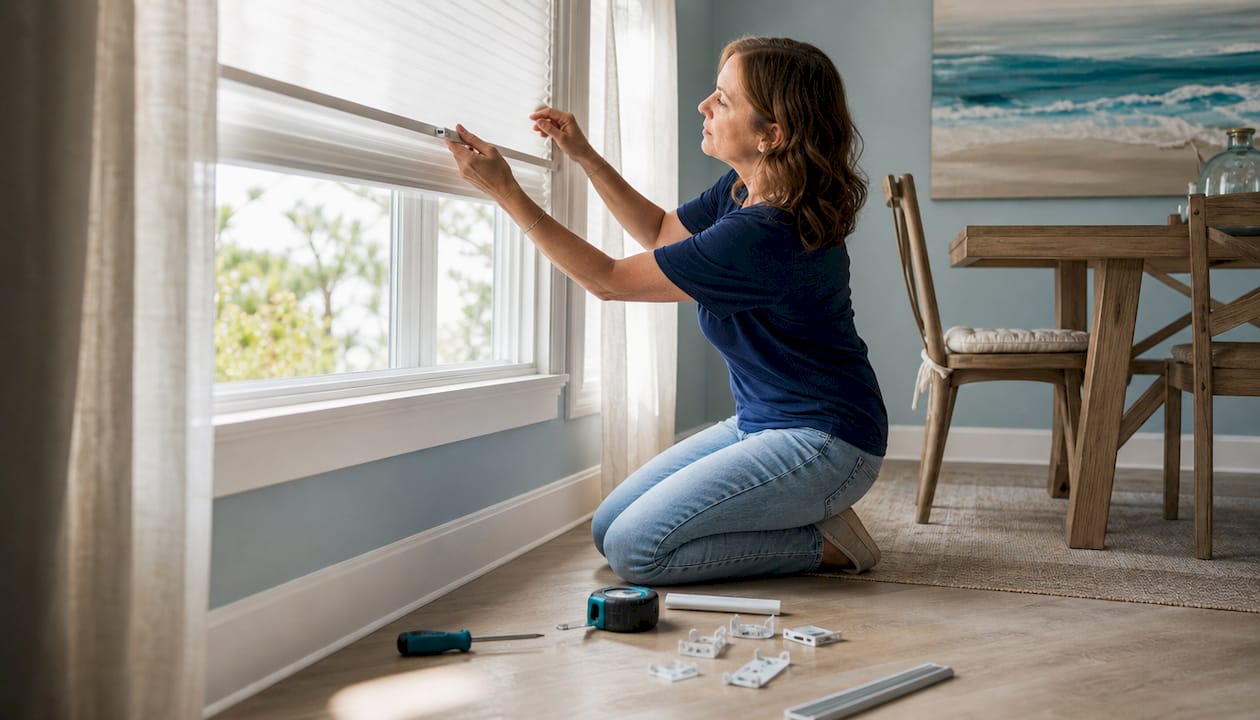
Express blind installation is defined as a two-part approach combining expedited manufacturing with tool-free or quick-mount hardware to get window blinds measured, delivered, and mounted in a fraction of the time a standard order requires. Where traditional custom blinds take 2–3 weeks to arrive, express programs cut that to as few as 4–5 working days. On the hardware side, no-drill tension systems can mount a blind in under a minute per window. For homeowners who need coverage fast and renters who cannot put holes in walls, this combination is the most practical blind solution available today.
What is express blind installation, and what types exist?
Express blind installation covers two distinct but often combined services: fast manufacturing and fast mounting. Understanding both helps you choose the right option for your window and your timeline.
Express manufacturing
Standard custom blinds sit in a production queue for weeks. Express manufacturing moves your order to the front of that queue. Lead times drop from the typical 2–3 week window to 4–5 working days. That speed comes at a cost. Express fees typically range from $30 for a single roller blind to $100 for an automated blackout cassette system. The fee reflects the labor required to reprioritize production, not a difference in materials or quality.
No-drill and quick-mount hardware
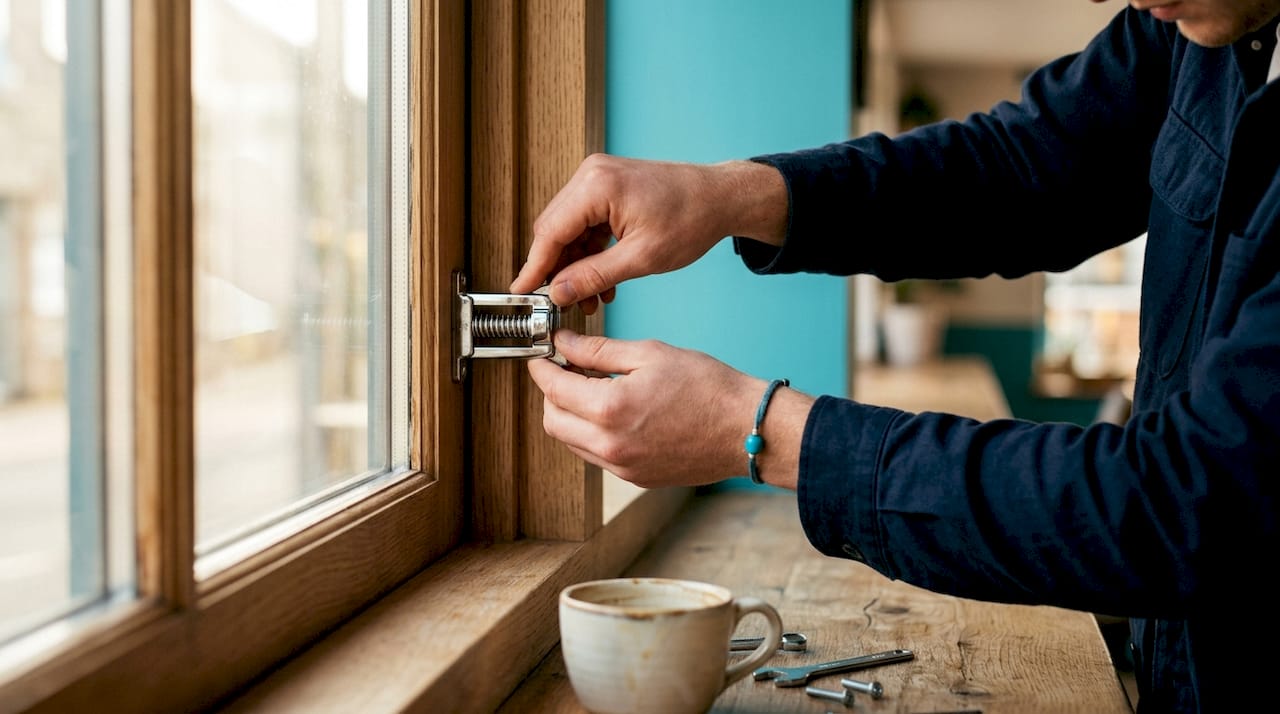
The second category focuses on how the blind attaches to your window. No-drill systems use spring-lock tension technology that fits inside the window recess without screws. The blind locks in place by expanding against the frame. No holes are drilled, no damage occurs, and the blind comes down just as fast as it went up. Clip-on and adhesive-mount brackets serve a similar purpose for shallow or unusually shaped frames.
The table below compares traditional and express approaches across the factors that matter most to homeowners and renters.
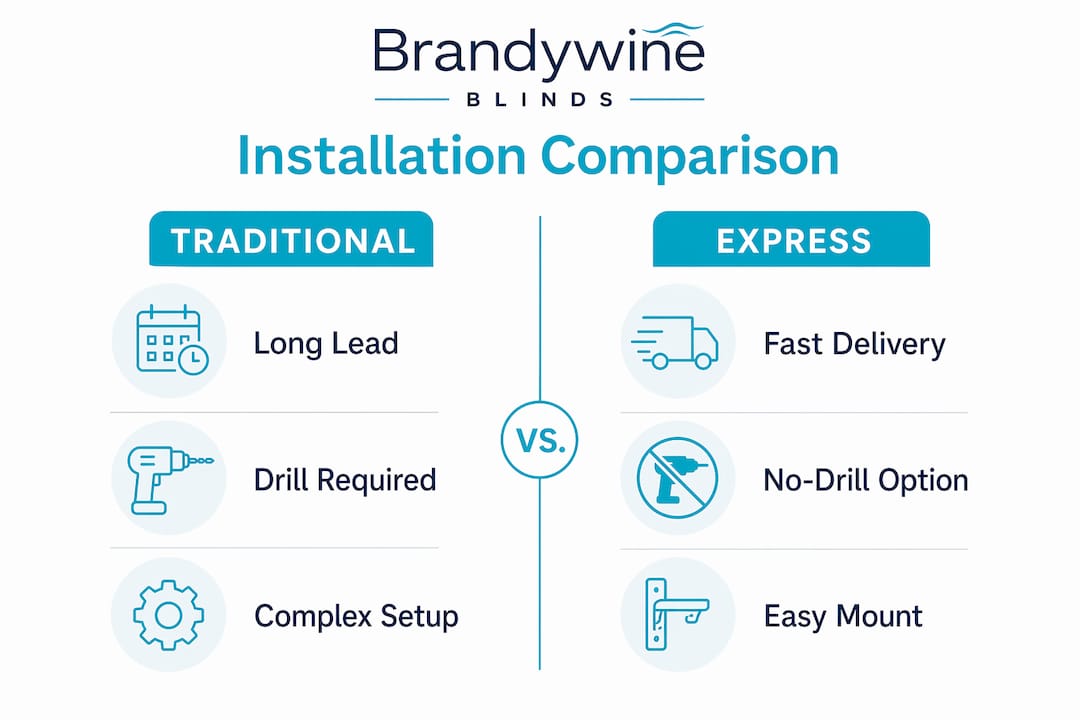
Factor | Traditional installation | Express installation |
Manufacturing lead time | 2–3 weeks | 4–5 working days |
Installation time per window | 30–60 minutes | Under 1 minute (no-drill) |
Tools required | Drill, level, screwdriver | None (tension systems) |
Wall or frame damage | Screw holes required | Zero holes |
Additional cost | Standard pricing | $30–$100 per blind |
Best for | Permanent installs | Renters, fast retrofits |
Pro Tip: If you are renting, confirm with your landlord whether any wall penetration is prohibited before ordering. No-drill tension blinds satisfy most “no holes” lease clauses without negotiation.
How does the express blind installation process work?
The process runs in four clear stages from order to mounted blind. Each stage is short, and the whole sequence from placing an order to a finished window can happen within a single week.
Measure your window. Measure the inside width at the top, middle, and bottom of the recess. Use the smallest measurement for inside-mount blinds. Write down the height from the top of the recess to the sill. Accuracy here prevents the most common express-order mistake: a blind that arrives too wide or too narrow to fit the tension system.
Place your express order. Select the express manufacturing option at checkout. Confirm the blind type, fabric, and control side. Pay the express surcharge. Your order enters an accelerated production queue and ships within 4–5 working days.
Receive and unpack your hardware. No-drill blinds ship with the blind tube, a spring-loaded expansion mechanism, and a lock ring or nut. No separate trip to the hardware store is needed. Check that the blind width matches your measurement before proceeding.
Mount the blind. Compress the spring mechanism, position the blind inside the recess, and release. The tension pushes outward against both sides of the frame. Tighten the lock ring firmly. Give the blind a gentle shake to confirm it holds. Patented expansion mechanisms secure the blind in under a minute when the lock is fully tightened.
Pro Tip: Measure twice before submitting your express order. A remeasure costs nothing. A reorder on an express timeline costs both money and time.
For homeowners choosing drilled hardware instead of tension systems, the process adds two steps: marking bracket positions with a pencil and pre-drilling pilot holes with a 1/16 or 3/32-inch bit to prevent wood frame splitting. Skipping pilot holes is the most common DIY mistake on drilled installs.
What are the benefits and limits of express blind installation?
Express blinds deliver speed, convenience, and affordability without sacrificing style or quality. They are the right call for most homeowners and renters who need functional window coverage quickly. But they are not the right call for every window or every situation.
Clear benefits
Speed. A window that would take three weeks with a standard order is covered in under a week.
No property damage. Tension-based systems leave zero holes, making them fully compliant with most rental agreements.
Low tool requirement. No drill, no level, no wall anchors. The entire install fits in your hands.
Reversibility. No-drill blinds come down in seconds. Renters can remove them before move-out with no patching required.
Cost control. Express fees add $30–$100 per blind, but that cost is often lower than paying a contractor for a same-week emergency install.
Real limitations
Frame depth matters. Tension systems need sufficient window recess depth and a solid, even surface to grip. Shallow frames, worn edges, or out-of-square windows can prevent a secure fit.
Weight limits apply. Heavy blackout fabrics or wide blinds generate more force than a tension mechanism can hold reliably. Drilled hardware is the better choice for large or heavy blinds.
Tension lock failure. Insufficient tension lock tightness is the leading cause of no-drill blind slippage over time. Always tighten the lock ring fully and repeat the shake test after the first week.
Pro Tip: Run your finger along the inside edge of your window recess before ordering. If the surface is crumbling, painted over multiple times, or uneven, a tension system will not grip reliably. Opt for drilled hardware or consult a professional.
How to choose the right express blinds for your home or rental
The right express blind depends on four factors: your window frame, your lease or ownership situation, your room’s function, and your budget.
Window frame compatibility. Measure recess depth first. A minimum of 1.5 inches of depth is generally required for tension systems to seat properly. Frames with solid wood or uPVC surfaces hold tension best. Plaster or crumbling painted surfaces need drilled brackets.
Lease restrictions. Renters should read their lease before ordering. Most “no modification” clauses prohibit drilling but say nothing about tension systems. If the lease is unclear, a written note from your landlord takes 10 minutes and protects your deposit. For guidance on choosing blinds for rentals, the frame compatibility question is always the first step.
Room function and light control. Bedrooms need blackout or high-opacity fabrics. Living rooms and kitchens often work well with light-filtering or solar options. Matching the fabric to the room’s purpose prevents a second purchase. Brandywineblinds offers light control and blackout options suited to express timelines.
Budget. Add the express surcharge to your blind cost before comparing options. A $30 express fee on a $60 roller blind brings the total to $90. That is still competitive against retail store pricing, especially when you factor in Brandywineblinds’ pricing, which runs roughly 30% below big-box store rates. Professional installation adds cost but removes the risk of a failed tension lock or a split frame.
Style and control type. Cordless controls work well in homes with children or pets. Motorized options suit high windows or homeowners who want remote operation. Modern roller shades pair well with express manufacturing timelines because their simple tube design ships and installs faster than layered or Roman styles.
Customers benefit most when express installation is paired with professional guidance that confirms compatibility between the blind system and the window frame type before the order is placed.
Key Takeaways
Express blind installation is the fastest, most practical method for homeowners and renters who need quality window coverage without weeks of waiting or wall damage.
Point | Details |
Express manufacturing speed | Express programs reduce delivery from 2–3 weeks to 4–5 working days. |
No-drill installation time | Tension-based systems mount a blind in under a minute with zero holes. |
Express surcharge range | Fees run $30–$100 per blind depending on product complexity. |
Frame compatibility check | Measure recess depth and surface condition before choosing tension hardware. |
Tension lock is critical | Fully tighten the lock ring and run a shake test to prevent slippage over time. |
Why speed alone should not drive your blind decision
The market shift toward express blinds reflects something real: people want their homes to look finished now, not in three weeks. I get that. After years of working with homeowners and renters across the region, I have seen how a bare window in a bedroom or living room creates a low-grade daily frustration that people underestimate until it is gone.
That said, the biggest mistakes I see come from treating express installation as a purely logistical decision. Homeowners order fast, the blind arrives fast, and then they discover the window recess is too shallow for tension hardware or the frame is soft enough to split under a drill. A five-minute frame check before ordering would have prevented both problems.
My honest recommendation: use express manufacturing whenever your timeline demands it. The quality difference between express and standard production is negligible when you are working with a reputable supplier. But pair that speed with a proper frame assessment. If your window is not compatible with no-drill hardware, do not force it. A drilled install done correctly lasts decades. A tension blind on a bad frame fails within months.
The future of express installation is moving toward pre-measured ordering tools and same-week professional fitting. That combination, fast production plus expert mounting, is where the real value sits. DIY is fine for straightforward windows. For anything unusual, a local specialist saves more money than the installation fee costs.
— Dave
Brandywineblinds: fast blinds, professional results
Waiting weeks for window coverage is not the only option. Brandywineblinds provides custom blinds and shades with expedited production timelines, professional installation, and pricing that runs roughly 30% below big-box store rates.

Their local experts assess your window frames before recommending a mounting method, which eliminates the guesswork that leads to failed tension installs or split frames. From vertical blinds to cellular shades and blackout options, every product comes backed by a lifetime service warranty. If you want fast delivery and a correctly mounted blind the first time, Brandywineblinds is the practical next step. Reach out to schedule a free in-home consultation and get your windows covered this week.
FAQ
What is express blind installation?
Express blind installation combines expedited manufacturing, which cuts delivery from 2–3 weeks to 4–5 working days, with fast-mount hardware that installs in under a minute per window.
Can renters use express blinds without drilling?
Yes. No-drill tension systems use spring-lock technology to fit inside the window recess without screws, leaving zero holes and complying with most “no modification” lease clauses.
How much does express blind manufacturing cost?
Express surcharges typically range from $30 for a simple roller blind to $100 for a complex automated blackout system, added on top of the standard blind price.
What causes no-drill blinds to slip or fall?
Insufficient tension lock tightness is the leading cause. Always tighten the lock ring fully after mounting and perform a shake test to confirm the blind is secure.
Are express blinds lower quality than standard custom blinds?
No. Express manufacturing accelerates the production timeline, not the materials or construction standards. The blind itself is identical to a standard custom order.
Recommended
Comments