
How to Choose Blinds on a Budget in 2026
- WINDOWCOVERINGWIZARD
- 3 days ago
- 8 min read
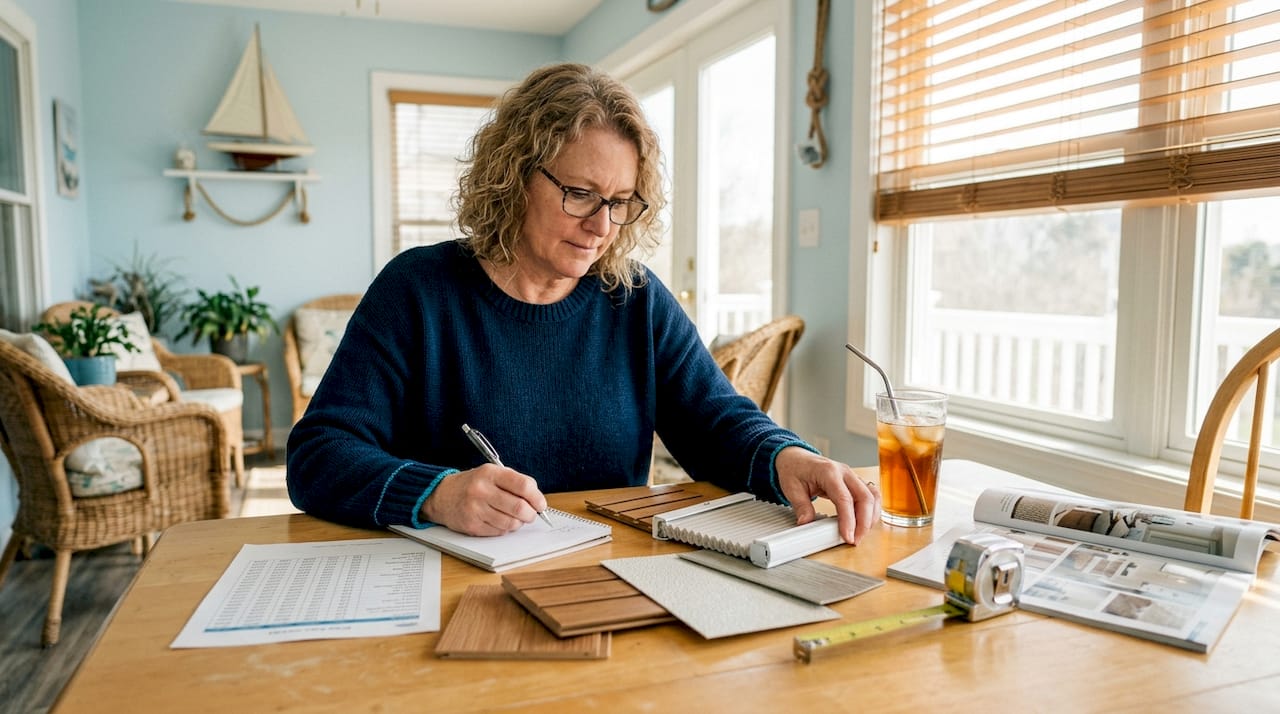
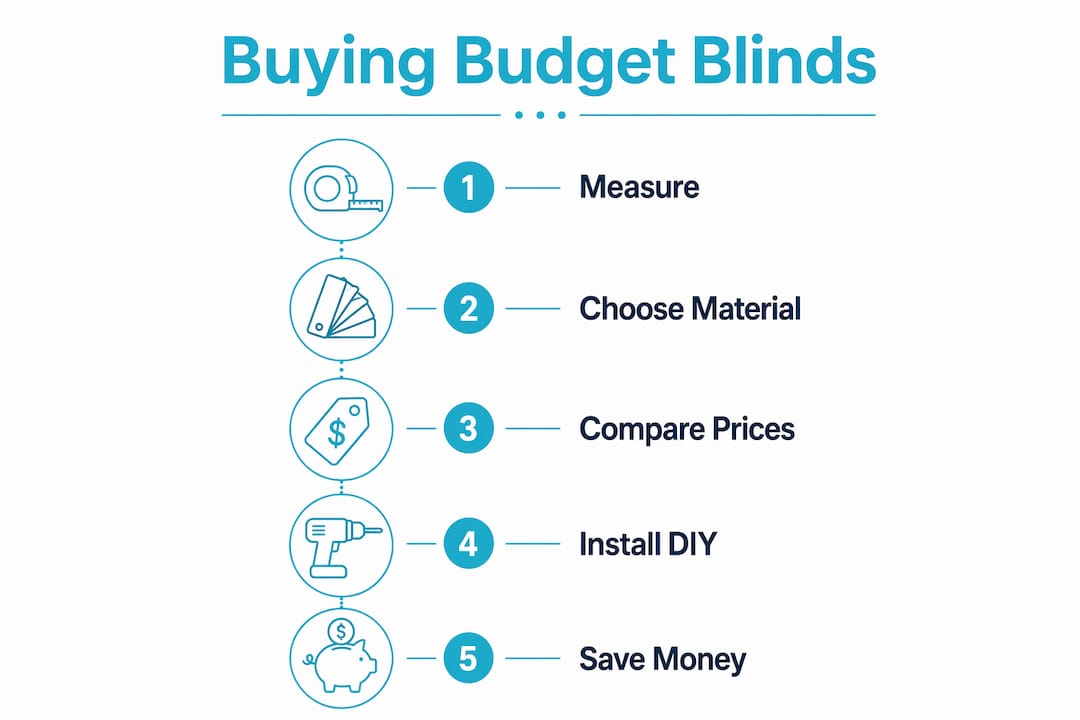
Choosing blinds on a budget means selecting affordable, durable window treatments like faux wood, vinyl, or cordless blinds that deliver style, light control, and easy installation without overspending. Budget-friendly blinds typically cost between $10 and $80 per standard window, making them accessible for nearly any household. The key is knowing which materials last, which mount options work for renters, and where the real savings hide. This guide covers every step, from picking the right blind type to measuring accurately and avoiding the mistakes that waste money.
What are the best types of budget-friendly blinds?
The right affordable window covering depends on your room, your light needs, and how long you want it to last. Four types dominate the budget category: faux wood, vinyl mini blinds, cordless blinds, and cellular shades.
Faux wood blinds
Faux wood blinds are the strongest value in the budget category. They cost up to 40% less than real wood and resist moisture, making them the right call for kitchens and bathrooms where real wood warps. Under normal use, faux wood blinds last 5–7 years. That lifespan puts them well ahead of vinyl in rooms with humidity.
Vinyl and aluminum mini blinds
Vinyl mini blinds are the most affordable option on the market. Cordless vinyl mini blinds sell for as low as $18 per window and include all mounting hardware. They resist warping, fading, and sagging, which is better performance than their price suggests. The trade-off is that thin vinyl slats can bend or break under heavy use, so they work best in low-traffic rooms.
Cordless blinds
Cordless blinds are no longer a premium feature. They now appear across nearly every budget blind category, from vinyl to faux wood. Cordless designs reduce strangulation risk by up to 95% compared to corded blinds. For households with children or pets, that safety margin makes cordless the default choice regardless of price.
Cellular shades
Cellular shades sit at the upper end of the budget range but deliver the best energy performance. Affordable cellular shades cost roughly $35–$55 per window and can reduce heating and cooling costs by up to 40%. That energy savings offsets the higher upfront price over time. They also work well as light control solutions in bedrooms and living rooms where both privacy and insulation matter.
Pro Tip: For rooms with direct sun exposure, pair a light-filtering cellular shade with a blackout roller shade on the same window. You get full light control at a fraction of the cost of a motorized system.
Here is a quick comparison of the four main budget blind types:
Type | Price Range | Lifespan | Best Room | Key Strength |
Faux Wood | $25–$60 | 5–7 years | Kitchen, bath | Moisture resistance |
Vinyl Mini Blinds | $10–$30 | 3–5 years | Office, bedroom | Lowest cost |
Cordless Blinds | $20–$60 | 3–6 years | Any room | Child safety |
Cellular Shades | $35–$55 | 5–8 years | Bedroom, living room | Energy savings |
How do you measure windows for budget blinds?
Accurate measuring is the single most important step when buying cost-effective window treatments. One wrong number means a return, a reorder, and a delay that costs more than the blind itself.
The first decision is mount type. Inside mount blinds sit inside the window frame for a clean, recessed look. Outside mount blinds attach above and beyond the frame to cover more of the wall and block more light. Each requires a different measuring approach.
Follow these steps for a precise measurement:
Measure width at three points. For inside mounts, measure the window opening at the top, middle, and bottom. Use the narrowest measurement. For outside mounts, add 2–3 inches on each side of the frame to minimize light gaps.
Measure height at three points. Measure the left side, center, and right side of the window opening. Use the tallest measurement for inside mounts.
Account for the headrail. The headrail is often 0.5 inches narrower than the slats. On outside mounts, this creates visible light gaps along the sides if you do not add enough width to your order.
Write down all six numbers. Do not rely on memory. Label each measurement with its location before you order.
Measure twice, order once. Homeowners who measure themselves save money but must double-check every number to avoid costly errors.
A detailed DIY measuring guide walks through inside and outside mount techniques with diagrams if you want a visual reference.
Pro Tip: Use a metal tape measure, not a fabric one. Metal tapes hold their shape and give you a consistent reading across all three measurement points.
For large or unusually shaped windows, the measuring process gets more complex. The guide on covering large windows affordably covers those cases in detail.
What are the best ways to save money on blinds?
Smart buying strategy cuts the total cost of your window treatments well beyond the sticker price. The savings come from three areas: installation, where you buy, and when you buy.
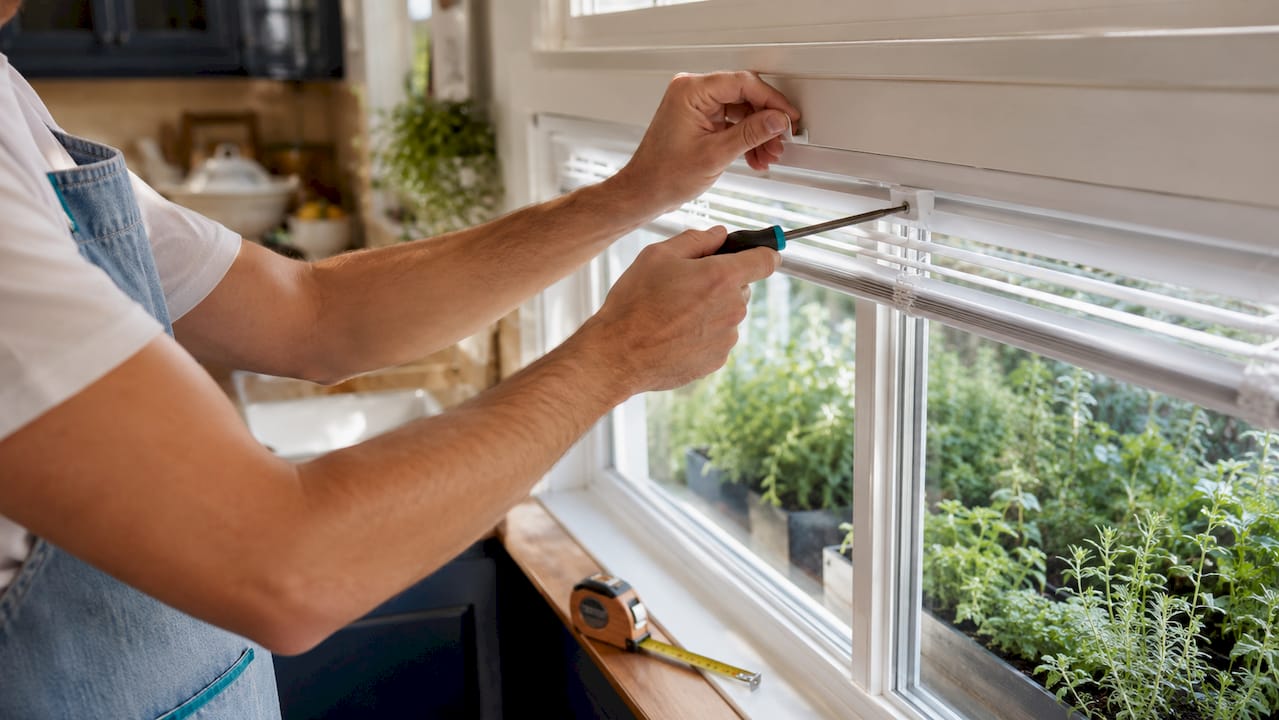
DIY installation is the biggest lever. DIY installation saves $75–$150 per window in labor costs. On a five-window apartment, that is $375–$750 back in your pocket. Most budget blinds ship with all necessary hardware and a basic instruction sheet. The job typically takes 15–30 minutes per window with a drill and a level.
No-drill options for renters remove the barrier of wall damage entirely. No-drill tension-mount blinds install in under 30 seconds using pressure or adhesive. They work best on smaller windows and carry load limits, so check the product specs before ordering for wide windows. Renters who use these avoid deposit deductions for wall damage, which adds real financial value.
Here are the top cost-saving moves when buying cheap blinds options:
Buy during sales. Major retailers run window treatment sales in january, july, and around Labor Day. Discounts of 20–40% are common.
Compare total cost, not just price. A $15 blind that ships for $12 costs more than a $22 blind with free shipping. Always calculate the delivered price.
Buy in bulk. Many online retailers offer per-unit discounts when you order five or more blinds at once.
Check local specialists. Brandywineblinds operates without corporate overhead or franchise fees, which means their prices run up to 30% lower than big box competitors on comparable products.
Use financing when available. Spreading payments over 6–12 months at zero interest keeps your monthly budget intact while letting you buy better quality upfront.
Pro Tip: Before ordering online, get one quote from a local window treatment specialist. You may find that custom installation costs less than you expect, especially when you factor in the time you spend measuring, ordering, and returning ill-fitting blinds.
What mistakes should you avoid when choosing blinds on a budget?
The most expensive mistake in discount blinds buying is not the blind itself. It is the error that forces a return, a reorder, or a replacement within a year.
“The cheapest blind is rarely the most affordable one. A $12 vinyl blind that warps in six months costs more over three years than a $45 faux wood blind that holds up.”
These are the mistakes that consistently undermine value:
Ordering too narrow for outside mounts. Many budget blinds sized for inside mounts are purposely slightly narrower than the window frame. Ordering without this knowledge leads to light gaps on outside mount setups. Always add width when mounting outside the frame.
Ignoring moisture resistance in wet rooms. Vinyl and fabric blinds degrade quickly in high-humidity environments. Faux wood is the correct material for kitchens and bathrooms.
Skipping cordless in homes with children. Corded blinds remain a strangulation hazard. Cordless designs cost only a few dollars more and eliminate the risk entirely.
Buying the cheapest option without checking the warranty. Budget blinds often need replacement every 3–5 years, while premium types last two to four times longer. A blind with no warranty is a blind with no recourse when it fails early.
Forgetting to read product reviews. Reviews reveal real-world issues like slat brittleness, difficult mounting hardware, and color differences from product photos. Spend five minutes reading them before you order.
For rooms where you want both privacy and style without a high price, the window shades buyer’s guide covers room-by-room recommendations across multiple price points.
Key takeaways
The best approach to choosing blinds on a budget is matching material to room conditions, measuring precisely, and buying during sales or from local specialists who cut overhead instead of quality.
Point | Details |
Match material to room | Use faux wood in wet rooms and vinyl or cordless in dry, low-traffic spaces. |
Measure before you order | Measure width and height at three points each and account for headrail width on outside mounts. |
DIY saves real money | Installing blinds yourself saves $75–$150 per window in labor costs. |
Cordless is the safety standard | Cordless blinds reduce strangulation risk by up to 95% and cost only marginally more. |
Cheap upfront can cost more | Budget blinds last 3–5 years; investing slightly more in faux wood or cellular shades extends that lifespan significantly. |
What i’ve learned after years of watching people buy the wrong blinds
Most people treat blind buying as a one-time errand. They grab the cheapest option, install it in 20 minutes, and move on. I get it. But that approach almost always leads to a second purchase within two years, and that second purchase wipes out the original savings.
The pattern I see most often: someone buys thin vinyl blinds for a bathroom, they warp within a season, and then they spend more replacing them than they would have spent on faux wood from the start. Faux wood costs more upfront, but the 5–7 year lifespan makes it the cheaper choice over time. That math is not complicated, but it requires thinking past the price tag.
The other thing I have noticed is how much the no-drill and cordless market has improved. A few years ago, tension-mount blinds felt like a compromise. Today, products like LazBlinds cordless Roman shades install in seconds and look genuinely good. For renters especially, these are worth serious consideration. You protect your deposit and still get a finished, polished window.
My honest advice: measure twice, buy once, and spend 10 extra minutes reading reviews before you click order. The people who do that almost never end up with a return. The people who skip it almost always do.
— Dave
Get custom blinds without the big-box price tag
Brandywineblinds helps homeowners and renters find quality window treatments at prices that make sense. With over 30 years of experience and no franchise fees driving up costs, their local experts guide you through the full range of options, from vertical blinds and faux wood to cellular shades built for energy savings.

Every project includes professional measuring and installation, so you avoid the costly errors that come from DIY guesswork. Brandywineblinds also offers a lifetime service warranty and financing options that keep your monthly costs manageable. Contact them for a free in-home consultation and find out how much you can save compared to big box store pricing.
FAQ
What is the cheapest type of blind to buy?
Vinyl mini blinds are the most affordable option, starting at around $18 per window with all mounting hardware included. They work well in low-traffic rooms but are less durable than faux wood in humid environments.
Are cordless blinds worth the extra cost on a budget?
Cordless blinds reduce strangulation risk by up to 95% compared to corded designs and cost only a few dollars more per window. For homes with children or pets, the safety benefit makes them the clear choice.
How do i avoid light gaps with budget blinds?
For outside mount installations, add 2–3 inches of width beyond the window frame when ordering. The headrail on most budget blinds runs about 0.5 inches narrower than the slats, which creates visible gaps if you order to the exact frame width.
Can renters install blinds without damaging walls?
No-drill tension-mount blinds install using pressure or adhesive and leave no wall damage. They work best on smaller windows and have load limits, so check the product specifications before ordering for wide openings.
Do cellular shades actually save money on energy bills?
Affordable cellular shades cost $35–$55 per window and can reduce heating and cooling costs by up to 40%. Over a full year, that reduction in energy use offsets the higher upfront cost compared to vinyl or faux wood blinds.
Recommended
Comments