
Why Custom Blinds Beat Off-the-Shelf Blinds
- WINDOWCOVERINGWIZARD
- Jul 1
- 7 min read
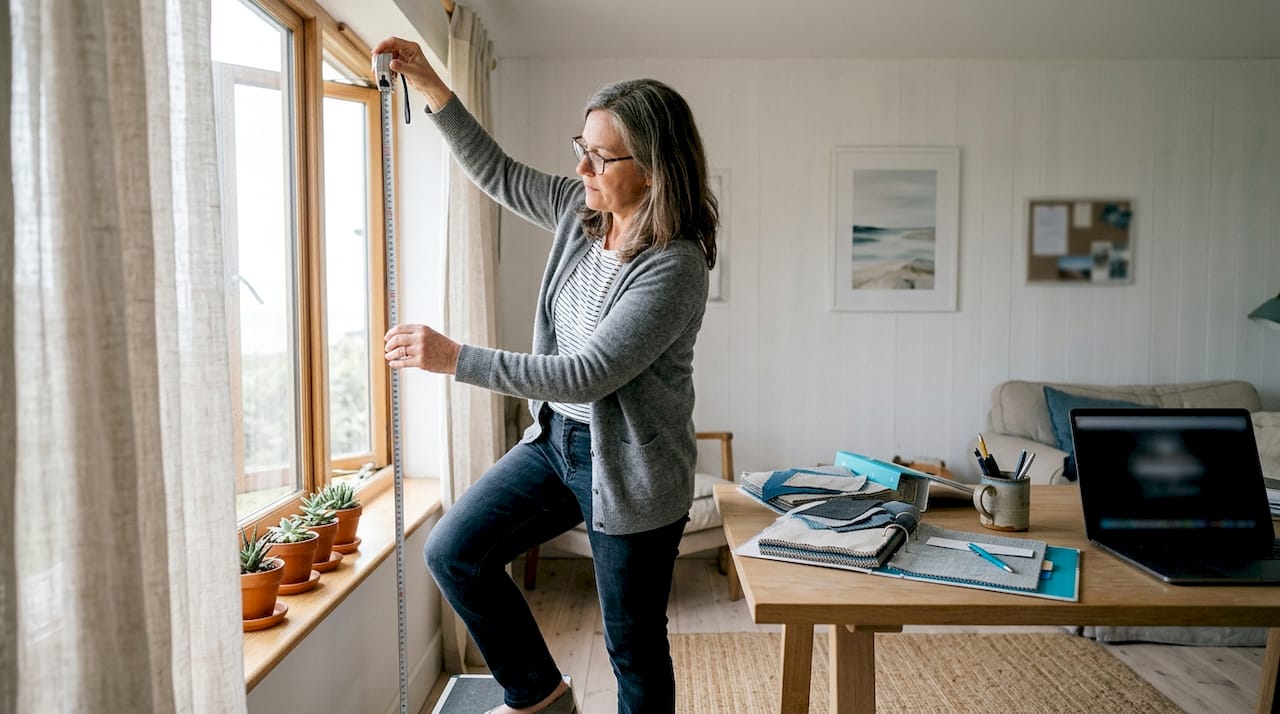
Custom blinds are made-to-measure window treatments built to exact dimensions and specifications, delivering a fit and finish that mass-produced blinds simply cannot match. The case for why custom blinds beat off-the-shelf blinds comes down to three things: precision fit, superior materials, and long-term value. Off-the-shelf blinds are manufactured in standard sizes that rarely align with real window dimensions, creating gaps, light leaks, and operational problems. Custom window treatments, by contrast, are measured and built to your specific windows, which means better light control, better insulation, and a cleaner look from day one.
Why custom blinds beat off-the-shelf blinds on fit and function
The single biggest flaw in off-the-shelf blinds is the gap problem. Standard blinds leave gaps of 1/4 to 1 inch along the edges of a window frame. Those gaps let in light, reduce privacy, and allow air to pass through, which undermines both comfort and energy efficiency.
Custom blinds are measured in 1/8-inch increments to eliminate those gaps entirely. That level of precision matters because windows are rarely perfectly square. Frames shift over time, walls settle, and construction tolerances vary. A blind cut to a single standard dimension will never account for those real-world imperfections.
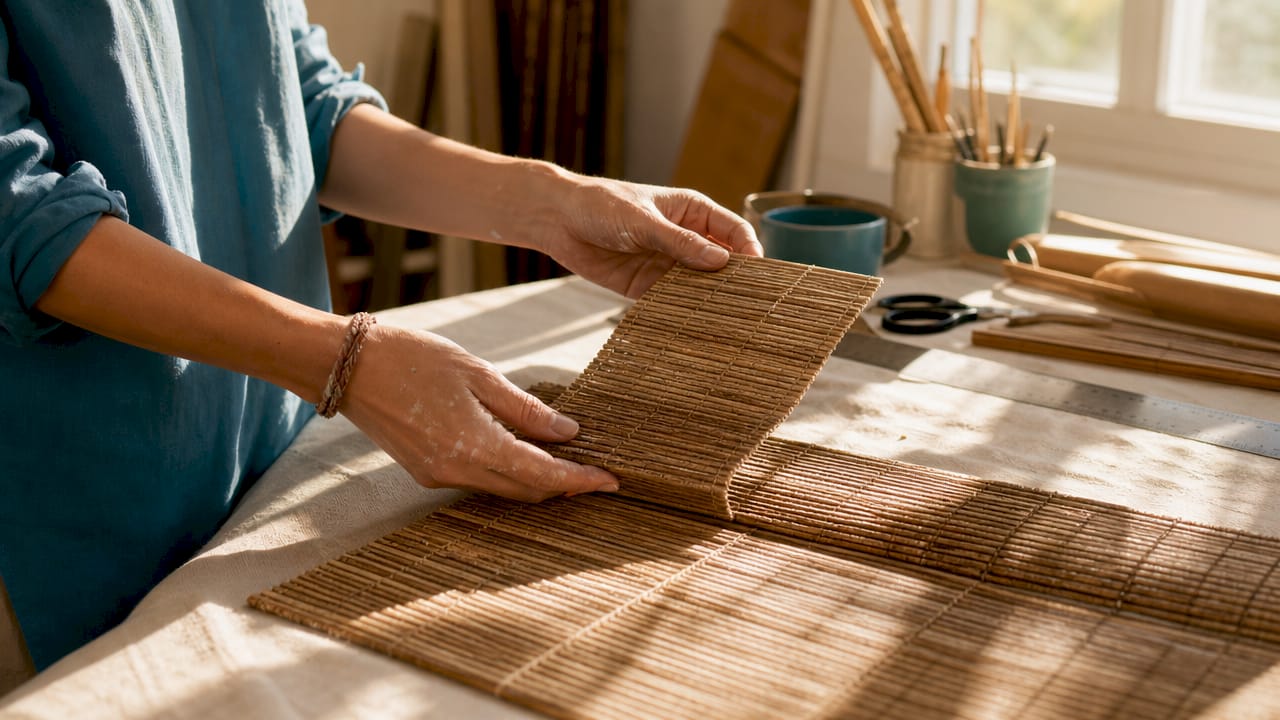
Professional measuring solves this by taking measurements at three points across the window: top, middle, and bottom. The narrowest measurement becomes the reference point. This approach catches frame irregularities that would otherwise cause a blind to bind, gap, or hang crooked.
The result is what made-to-measure specialists call a “calm, square, intentional look.” The blind operates smoothly, sits flush against the frame, and does not snag or bunch. Off-the-shelf blinds, trimmed down or forced into an imperfect opening, rarely achieve that result.
Gaps in standard blinds reduce privacy and allow drafts
Custom blinds are cut to 1/8-inch precision for a flush fit
Measurements taken at three points catch frame irregularities
Proper fit means smoother operation and longer product life
Professional installation improves alignment, mounting security, and daily function
Pro Tip: Before measuring, check whether your window frame is plumb using a level. Even a small tilt affects how a blind hangs and operates, and a professional measurer will account for it.
How material quality and warranties set custom blinds apart
Custom blinds use fundamentally different components than their off-the-shelf counterparts. Thicker slats, UV-resistant coatings, and braided cords are standard in the custom category. Hardware is machined metal at stress points rather than molded plastic, which is where most budget blinds fail first.
That difference in build quality shows up directly in warranty terms. Custom blind warranties run 3–10 years, while off-the-shelf products typically carry a one-year warranty. A longer warranty is not just a marketing claim. It reflects a manufacturer’s confidence that the product will hold up under daily use.
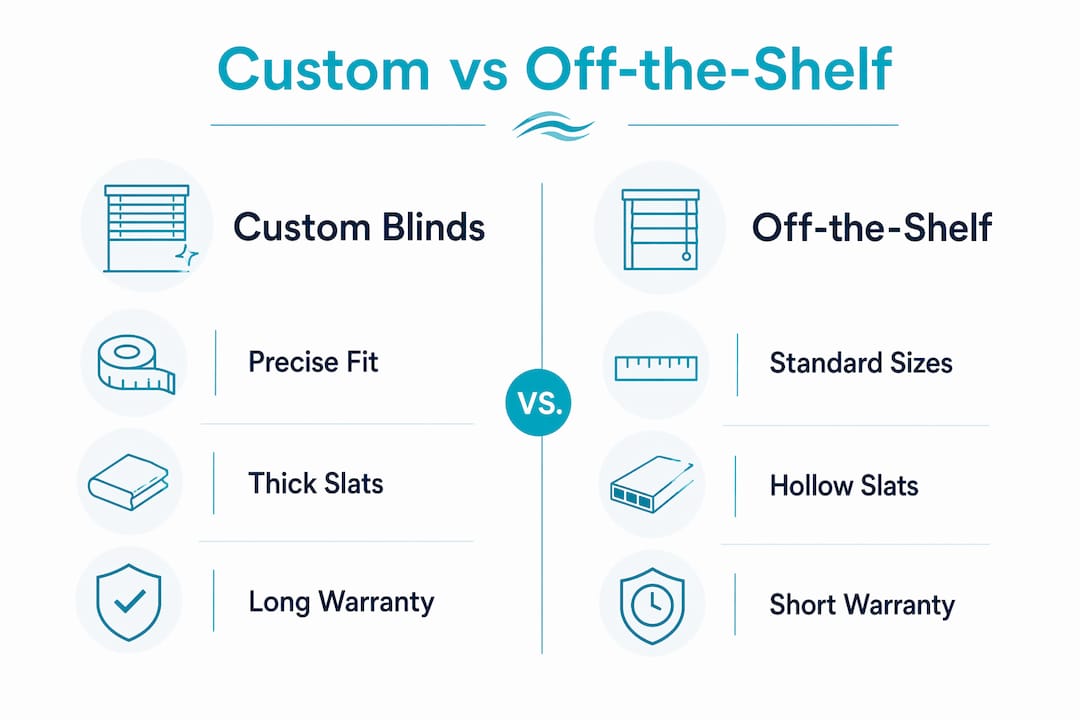
Off-the-shelf blinds often use hollow aluminum slats and plastic tilt mechanisms that wear out within two to three years of regular use. When the mechanism fails, the entire blind is usually replaced rather than repaired. Custom blinds, with metal mechanisms and reinforced cords, are designed to be serviced and to last.
Pro Tip: Ask your blind supplier specifically about the tilt mechanism and cord material before ordering. These are the two components that fail first, and they are the clearest indicator of overall build quality.
Feature | Custom blinds | Off-the-shelf blinds |
Slat material | Thicker, reinforced | Hollow or thin |
Hardware | Machined metal | Molded plastic |
UV coating | Standard | Rare |
Warranty | 3–10 years | ~1 year |
Repairability | High | Low |
Does the higher upfront cost of custom blinds make sense?
Custom blinds cost more at the point of purchase. The price range for custom window treatments runs $60–$350 per window, compared to $15–$80 for off-the-shelf options. That gap is real, and for a whole house it adds up quickly.
The long-term math tells a different story. Custom blinds carry a 45% lower total cost of ownership over a 10-year period compared to off-the-shelf alternatives. The reason is replacement frequency. Budget blinds typically need replacing every two to three years. Custom blinds, properly installed, routinely last a decade or more.
Energy savings add another layer to the value calculation. Custom blinds improve insulation by sealing gaps that standard blinds leave open. Better insulation means your heating and cooling system works less, which reduces utility costs over time. Features like blackout liners and cellular construction amplify that effect, especially in climates with extreme summers or winters.
Off-the-shelf blinds do make sense in specific situations. A rental property where you need temporary coverage, a garage window, or a room under renovation are all cases where a $20 blind is the right call. The mistake is applying that logic to primary living spaces where fit, light control, and appearance actually matter.
Pro Tip: Order fabric samples before committing to any custom blind order. Most manufacturers do not accept returns on custom products, and colors look different under artificial light than they do in a showroom or on a screen.
When you evaluate what drives custom blind costs, the main factors are material grade, operating mechanism type, fabric weight, and window size. Motorized systems and specialty fabrics push costs toward the higher end of the range. Standard lift mechanisms with mid-grade fabrics land in the middle. Understanding those cost drivers helps you prioritize where to spend and where to save across a full home.
What functional advantages do custom blinds offer beyond fit?
Custom window treatments give you control that off-the-shelf products cannot replicate. Light blocking is the most obvious example. A precisely fitted blackout blind eliminates virtually all light intrusion, which matters in bedrooms, home theaters, and nurseries. A standard blind with a 1/2-inch gap on each side lets in a band of light even when fully closed.
Regional climate influences which features matter most in a custom blind. Homes in high-sun climates benefit from UV-protective fabrics that block solar heat gain without darkening a room. Homes in cold climates benefit from cellular construction, which traps air in honeycomb pockets and acts as an insulating barrier. Off-the-shelf blinds rarely offer these features in meaningful form.
The range of custom window shades available today covers every functional need and design preference. Options include:
Blackout and room-darkening fabrics for sleep and media rooms
Solar shades that reduce glare while preserving an outdoor view
Sheer and light-filtering fabrics for living areas with natural light
Cellular construction for maximum thermal insulation
Motorized operation for large or hard-to-reach windows
Each of those options can be matched to your exact window dimensions, your room’s color palette, and your operating preference. That level of personalization is simply not available in a box on a retail shelf.
Well-chosen custom blinds for living room windows also contribute to a home’s perceived value. Buyers and renters notice window treatments. Properly fitted, quality blinds signal that a home has been maintained and considered. Ill-fitting or damaged blinds signal the opposite.
Key takeaways
Custom blinds deliver better fit, longer life, and lower total cost than off-the-shelf blinds, making them the stronger choice for any room where appearance, light control, or energy efficiency matters.
Point | Details |
Fit precision matters | Custom blinds are cut to 1/8-inch increments, eliminating gaps that cause light leaks and drafts. |
Materials outlast budget options | Machined metal hardware and UV-resistant fabrics extend product life well beyond off-the-shelf alternatives. |
Long-term cost is lower | Custom blinds cost 45% less over 10 years due to fewer replacements and better durability. |
Energy savings are real | A proper seal reduces heating and cooling load, especially with cellular or blackout construction. |
Order samples first | Most custom blind orders are non-returnable, so testing fabric color and texture before ordering prevents costly errors. |
What 30 years in window treatments taught me about this decision
The homeowners I see most frustrated are the ones who bought off-the-shelf blinds to save money and are now replacing them for the second or third time. The math never works out the way they expected. A $25 blind that lasts two years costs more over a decade than a $150 custom blind that lasts twelve.
The mistake I see most often is treating every window the same. A laundry room window and a master bedroom window are not the same decision. Spend where it counts: bedrooms, living rooms, and any window that faces direct sun. Use simpler solutions where function is the only requirement.
The other overlooked factor is installation. A perfectly made blind hung incorrectly will bind, gap, and wear out faster than it should. Professional measurement and installation are not upsells. They are the reason the product performs as designed. I have seen homeowners spend $400 on custom blinds and then hang them themselves with a crooked bracket, and the result looks worse than a $30 off-the-shelf blind installed correctly.
My honest advice: prioritize the rooms you live in most, get professional measurements, and order samples before you commit. Those three steps eliminate most of the regret I hear about from homeowners who went a different direction.
— Dave
Brandywineblinds: custom window treatments without the big-box markup
Brandywineblinds has spent over 30 years fitting homes across Chester County and the surrounding area with custom vertical blinds and a full range of made-to-measure window treatments. By cutting out franchise fees and corporate overhead, Brandywineblinds delivers custom quality at prices that are often significantly lower than what you would pay at a big-box retailer.

Every project starts with a professional in-home measurement, so your blinds fit the way they are supposed to from day one. Whether you need blackout shades for a bedroom, solar shades for a sun-facing living room, or light control solutions for a home office, Brandywineblinds guides you through the full range of options and handles installation with a lifetime service warranty backing every job.
FAQ
What is the main difference between custom and off-the-shelf blinds?
Custom blinds are built to your exact window dimensions in 1/8-inch increments, while off-the-shelf blinds come in fixed standard sizes. That difference in fit determines light control, privacy, insulation, and how long the product lasts.
Why do custom blinds cost more upfront?
Custom blinds use higher-grade materials, machined metal hardware, and UV-resistant fabrics, and each unit is built individually to order. Those production factors drive the $60–$350 per window price range compared to $15–$80 for standard options.
Are custom blinds worth it for renters?
Custom blinds make sense for renters in long-term leases where comfort and aesthetics matter. For short-term or uncertain tenancies, off-the-shelf blinds are a more practical choice since custom products cannot be returned or easily repurposed.
How long do custom blinds typically last?
Custom blinds carry warranties of 3–10 years and routinely last a decade or more with proper care. Off-the-shelf blinds typically carry a one-year warranty and often need replacing within two to three years of regular use.
Can I install custom blinds myself?
Custom blinds can be self-installed, but professional installation reduces the risk of misalignment, improper mounting, and premature wear. Professional installation also protects the product warranty and ensures the blind operates correctly from the first day.
Recommended
Comments