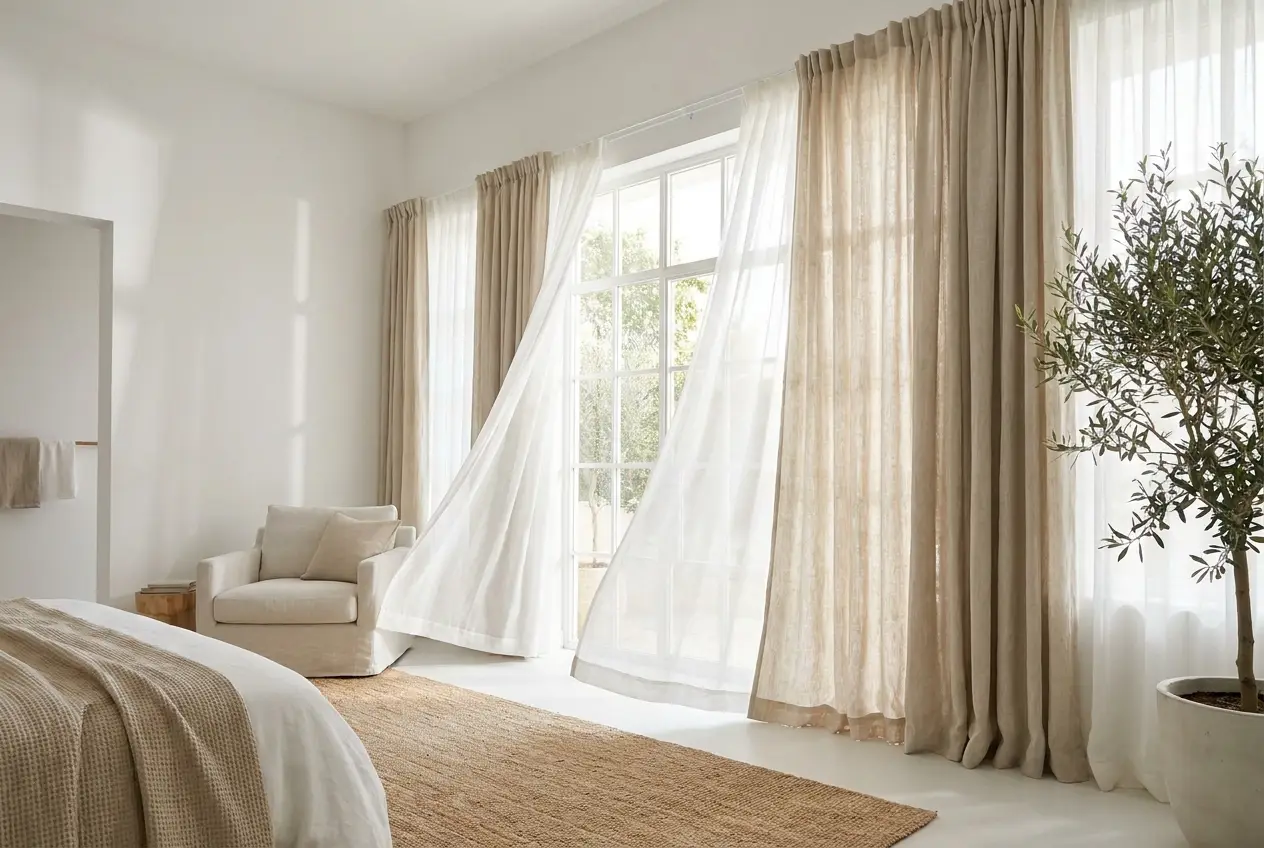
How to Specify Window Treatment Hardware Right
- WINDOWCOVERINGWIZARD
- 1 day ago
- 8 min read

Window treatment hardware is defined as the rods, brackets, rings, finials, and track systems that physically support and operate your window coverings. Specifying it correctly is not a decorating afterthought. The wrong rod diameter causes sagging. The wrong bracket count causes bowing. And since june 2024, the wrong cord configuration can put you out of compliance with federal safety standards. This guide walks you through how to specify window treatment hardware with the precision that interior decorators and experienced installers use every day, covering measurement, material selection, hardware types, safety compliance, and installation pitfalls.
How to specify window treatment hardware: start with measurements
Measurement is the foundation of every hardware decision you make. Get it wrong here, and every subsequent choice compounds the error.
The most common measurement mistake is sizing the rod to match the window frame exactly. Rod length should exceed the window opening by at least 8 inches total, meaning 4 inches on each side. That extra length lets curtain panels stack off the glass when open, so you get full light and an unobstructed view. Skipping this step leaves curtains bunched over the glass even when pulled back.

Pro Tip: Measure the rod placement height before you buy anything. Hanging a rod 4 to 6 inches above the window frame makes ceilings look taller and windows look larger. Hanging it at the ceiling line works even better in rooms with low ceilings.
Here is what to measure before ordering any hardware:
Window width: Measure the full frame width, then add 8–12 inches for rod length.
Rod height: Measure from the floor to where you want the rod, then subtract your curtain panel length to confirm placement.
Bracket projection: Measure how far the bracket extends from the wall. This determines clearance for rings, clips, and layered rods.
Ring diameter: Rings must fit over the rod without binding. Standard rings fit 1-inch rods; check the spec before ordering.
Clearance for finials: Finials add length to each end of the rod. Account for them when measuring total wall span.
Measure only after deciding the full treatment footprint, including whether you plan to layer curtains, add a valance, or use a motorized system. Measuring before those decisions are locked in produces hardware specs that do not match the final installation.
Does rod diameter really matter for curtain weight?
Rod diameter is one of the most underspecified details in residential window treatments. The answer is yes, it matters significantly.
Hardware weight capacity must match the curtain weight to prevent sagging and structural failure. Thin rods in the 5/8-inch range work well for lightweight sheers and linen panels. Rods at 1 inch to 1.5 inches in diameter handle mid-weight fabrics like cotton and polyester blends. Velvet, blackout, and thermal curtains require rods at 1.5 inches or larger, paired with heavy-duty brackets rated for the load. Using hardware rated for lightweight curtains with heavy drapes causes bowing and eventual bracket failure.

Rod diameter | Best for | Material options |
5/8 inch | Sheers, lightweight linen | Steel, aluminum |
1 inch | Cotton, polyester blends | Steel, brass, wood |
1.5 inch | Velvet, blackout, thermal | Steel, wrought iron |
2 inch | Extra-heavy drapes, wide spans | Steel, solid wood |
Material choice affects both durability and style. Steel and brass rods hold heavy fabrics longer and resist rust, making them the better choice for bathrooms and humid spaces. Wood rods add warmth and texture but carry less weight and can warp in high-humidity rooms. Decorative finials in brass, nickel, or resin attach to rod ends and affect the overall visual weight of the installation.
Pro Tip: If you are unsure about fabric weight, bring a full panel to a hardware showroom and weigh it. Most rods list their maximum load in pounds. Match the spec, not the look.
What are the main types of window treatment hardware?
Window treatment hardware falls into four primary categories. Each serves a different function and suits different window styles.
Single rods are the most common type. They hold one curtain layer and work for any standard window. They come in fixed lengths or adjustable spans, typically covering windows from 28 inches to 144 inches wide with the right extension.
Double rods hold two curtain layers on separate rods mounted at different projections from the wall. Double rods let you hang a sheer behind a heavier drape, giving you independent control over light filtering and privacy. This is the go-to hardware choice for living rooms and bedrooms where you want both daytime diffused light and nighttime blackout coverage.
Traverse rods use a cord or wand mechanism to draw curtains open and closed along a track. They work best for wide windows, sliding glass doors, and formal drapery panels that need to open and close frequently without handling the fabric.
Tension rods require no drilling and mount inside the window frame using spring pressure. They suit lightweight curtains in rental properties or spaces where wall damage is not acceptable. They are not rated for heavy fabrics.
Motorized track systems represent the current growth area in residential hardware. They pair with smart home systems like Google Home and Amazon Alexa, and they are the cleanest solution for cordless window treatment compliance under current safety standards.
What safety standards apply to window treatment hardware?
The ANSI/WCMA A100.1-2022 standard requires that most new window coverings sold in the United States be cordless or have cords that are permanently inaccessible. This standard took effect in june 2024. It applies to manufacturers and retailers, but it directly affects what hardware you should specify for any new installation.
The practical implication is straightforward. If you are ordering new window treatments today, specify cordless or motorized hardware from the start. Do not plan to add cord cleats or tensioners after the fact. Safety retrofits like cord cleats reduce hazard but do not achieve full compliance. The standard requires the hardware system itself to be designed without accessible cords, not patched after installation.
Here is how to approach compliance when specifying hardware:
Choose cordless lift systems for cellular shades, roller shades, and Roman shades. These use internal mechanisms that eliminate exposed cords entirely.
Specify motorized tracks for drapery panels in homes with children or pets. Motorized systems have no pull cords by design.
Select wand-operated traverse rods as a cord-free alternative for formal drapery that needs to open and close daily.
Avoid retrofitting existing corded hardware with tensioners as a compliance solution for new installations. Order compliant hardware upfront.
Confirm compliance at the point of order, not after delivery. Ask your supplier to confirm the product meets ANSI/WCMA A100.1-2022 before the order is placed.
Compliance requires selecting hardware designed for cordless operation at the time of order. Aftermarket solutions do not satisfy the standard for new installations.
Common installation mistakes and how to avoid them
Most hardware installation failures trace back to decisions made before a single bracket goes into the wall. The specification errors happen at the planning stage.
The biggest mistake is measuring before deciding on the treatment. Measure only after determining the exact treatment area, layering plan, and functionality requirements. A double rod installation requires different bracket projection than a single rod. A motorized track requires a power source near the window. These decisions change your measurements.
Pro Tip: Draw a simple side-view sketch of your window showing the rod, brackets, rings, and curtain panel before you order anything. It takes five minutes and catches projection and clearance errors before they become return shipping problems.
Additional installation pitfalls to avoid:
Too few brackets: For rods wider than 48 inches, add a center support bracket every 36–48 inches to prevent sagging under fabric weight.
Wrong wall anchor: Drywall anchors rated for 10 pounds will not hold a 30-pound velvet panel. Match the anchor type and rating to the wall material and curtain weight.
Ignoring projection depth: If you are layering a sheer behind a drape, the front rod bracket must project far enough to clear the back rod. Standard double-rod brackets project 3.5 inches. Confirm this before ordering.
Skipping the level: A rod mounted even slightly off-level is visible from across the room. Use a laser level, not a bubble level, for spans over 60 inches.
Mismatched ring size: Rings that are too small bind on the rod and prevent smooth operation. Check that the ring inner diameter exceeds the rod outer diameter by at least 1/4 inch.
For large window hardware spanning more than 72 inches, always specify a center support bracket in addition to the two end brackets. This single addition prevents the most common failure mode in wide-window installations.
Key Takeaways
Specifying window treatment hardware correctly requires matching rod diameter to fabric weight, measuring after planning the full treatment footprint, and selecting cordless or motorized systems to meet current safety standards.
Point | Details |
Rod length rule | Extend the rod at least 8 inches beyond the window width so panels stack off the glass. |
Match diameter to weight | Use rods 1.5 inches or larger for velvet, blackout, and thermal curtains to prevent sagging. |
Safety compliance | ANSI/WCMA A100.1-2022 requires cordless or inaccessible-cord hardware for all new installations. |
Measure after planning | Lock in your treatment type and layering plan before taking any measurements. |
Support brackets matter | Add a center support bracket every 36–48 inches on rods wider than 48 inches. |
Why hardware specification deserves more respect than it gets
Most homeowners treat hardware as the last decision. They pick the curtains, fall in love with a fabric, and then grab whatever rod looks close enough at the hardware store. That approach costs money twice: once when the rod sags under a fabric it was never rated for, and again when the whole installation comes down and has to be redone.
The shift to cordless and motorized systems is the most significant change I have seen in residential window treatment hardware in years. The ANSI/WCMA A100.1-2022 standard is not a technicality. It reflects a real hazard, and the hardware industry has responded with genuinely better products. Motorized tracks from quality suppliers are quieter, more reliable, and easier to live with than corded traverse rods ever were.
The detail that most decorators overlook is bracket projection. You can specify the perfect rod and the perfect fabric and still end up with a dysfunctional installation because the bracket does not project far enough to clear a double-layer treatment. That one measurement, checked before ordering, prevents the most frustrating installation call-back I see.
My advice is to collaborate with a local supplier who does custom work. They will catch the projection issue, the anchor mismatch, and the ring-size problem before anything ships. The specification process is faster and more accurate when someone with installation experience reviews the plan before the order is placed.
— Dave
Window treatment hardware done right, with Brandywineblinds
Brandywineblinds has spent over 30 years helping homeowners and interior decorators in Chester County and the surrounding area get hardware specification right the first time. Their local experts handle the measurement, the compliance check, and the installation, so you are not guessing at rod diameters or bracket projections.

Their product range covers everything from cordless cellular shades with built-in compliance to motorized track systems and custom drapery hardware. Every installation comes with a lifetime service warranty. Brandywineblinds prices run competitively against big-box alternatives, and their team brings the kind of specification knowledge that prevents costly reinstalls. If you are ready to get the hardware right, light control solutions and full installation services are available for consultation today.
FAQ
What is the standard rod length for a window treatment?
Rod length should exceed the window opening by at least 8 inches total so curtain panels stack fully off the glass when open. Add 4 inches to each side of the window frame as a baseline.
How do I choose the right rod diameter for my curtains?
Match rod diameter to fabric weight. Sheers need rods at 5/8 inch, mid-weight fabrics need 1-inch rods, and heavy blackout or velvet curtains require 1.5-inch rods or larger with heavy-duty brackets.
Are corded blinds still legal to install in the US?
The ANSI/WCMA A100.1-2022 standard, effective june 2024, requires new window coverings to be cordless or have permanently inaccessible cords. Existing corded treatments are not banned, but new installations must meet the cordless requirement.
When do I need a center support bracket?
Add a center support bracket for any rod spanning more than 48 inches. Place supports every 36–48 inches across the rod span to prevent sagging under fabric weight.
What is the difference between a single rod and a double rod?
A single rod holds one curtain layer. A double rod holds two layers at different projections, letting you combine a sheer panel with a blackout drape for independent light and privacy control.
Recommended

Comments