
Professional Blind Installation vs DIY: 2026 Guide
- WINDOWCOVERINGWIZARD
- 3 days ago
- 7 min read
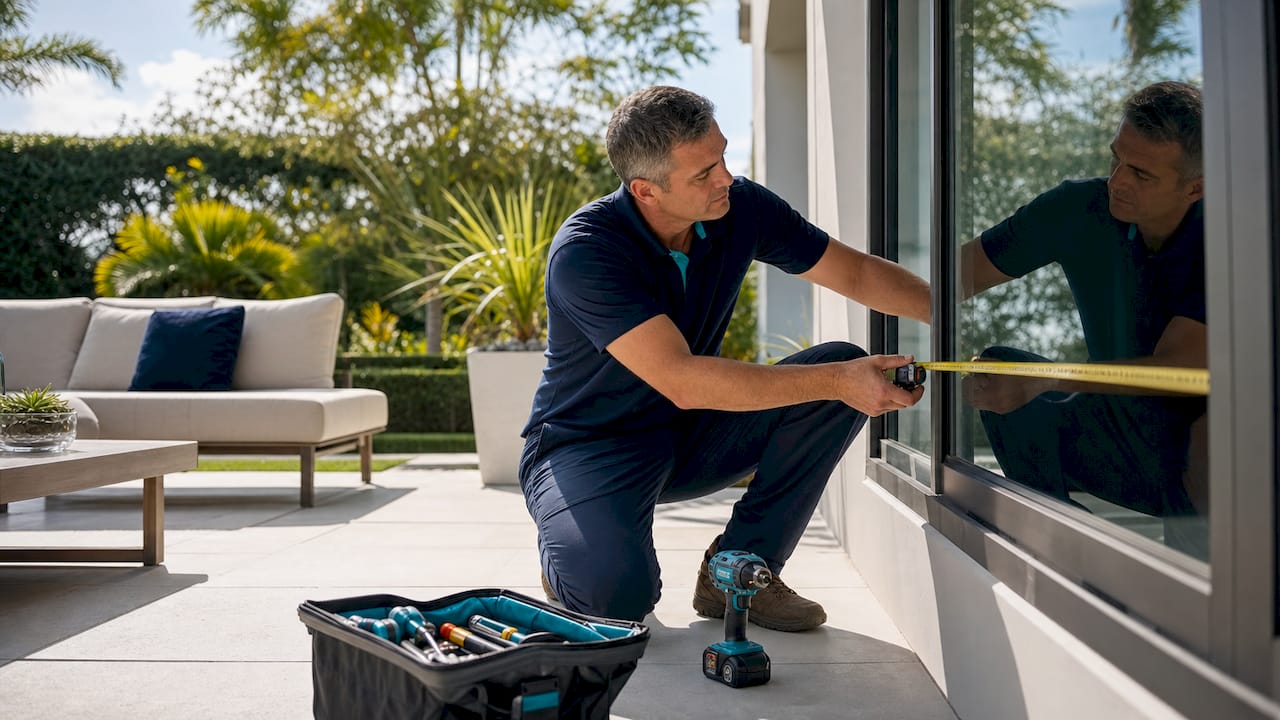
Professional blind installation is the process of hiring a trained technician to measure, fit, and mount window treatments with specialized tools and workmanship guarantees. DIY installation means the homeowner handles every step using basic tools like a drill, level, and tape measure. Choosing between professional blind installation vs DIY comes down to four factors: window complexity, your budget, available time, and your comfort with tools. This guide breaks down costs, risks, and practical tips so you can make a confident decision for your home.
1. What are the advantages of professional blind installation?
Professional installation removes the guesswork from window treatments. A trained installer measures each window at multiple points, selects the correct mounting hardware, and completes the job in a single visit. That efficiency matters most when you have many windows or a tight schedule.
Professionals excel with complex window types. Motorized blinds, oversized windows, arched frames, and skylights all require precise fitting that goes beyond standard DIY skills. A wrong measurement on a custom order can make the blind unusable and non-returnable.
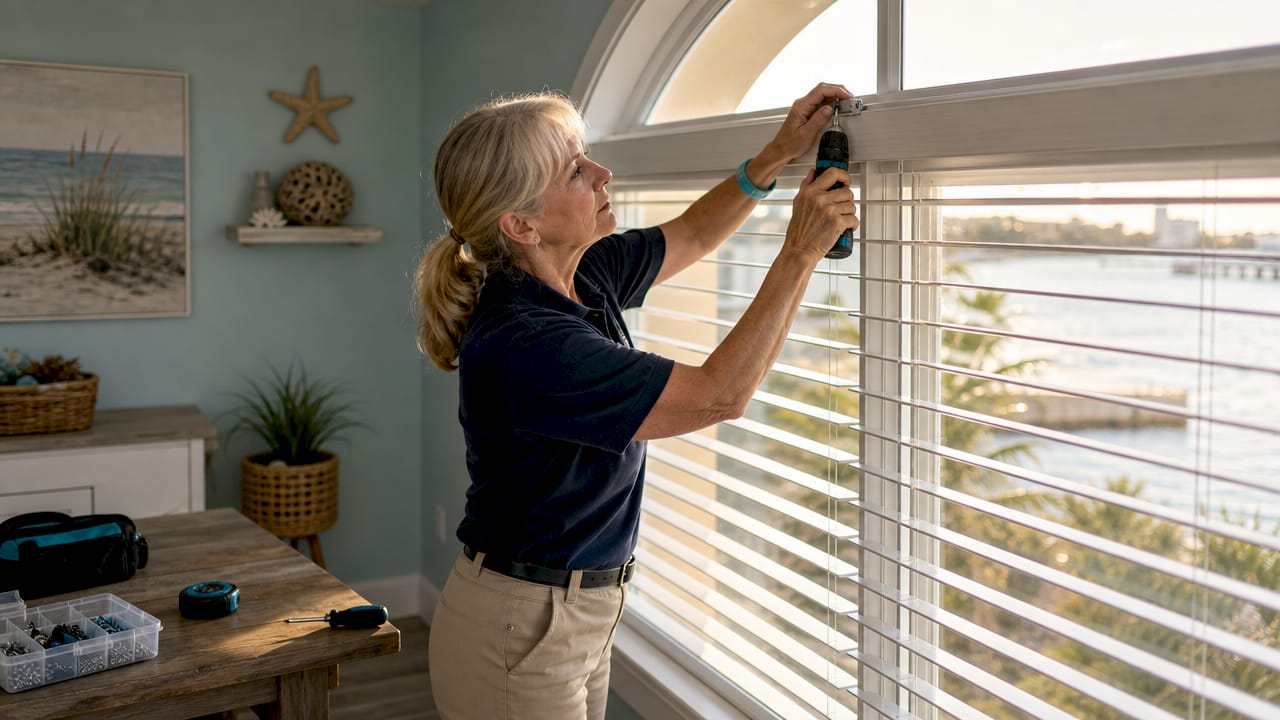
Wall anchor selection is another area where professionals consistently outperform DIY. Proper anchors prevent failure in drywall and masonry, especially with heavier wood blinds or cellular shades. Plastic anchors pulled from drywall cause wall damage that costs more to repair than the original installation fee.
Professional installers also carry workmanship guarantees. If a bracket fails or a blind sits crooked, they return and fix it at no charge. That protection is worth real money on a whole-house project.
Pro Tip: If your windows are non-square, high off the floor, or you are ordering custom treatments, the cost of professional installation is almost always less than the cost of a measurement error on a non-returnable custom blind.
2. What are the benefits and limitations of DIY blind installation?
DIY window treatment installation saves money on labor. Labor fees run $15–$50 per window, so a homeowner with eight standard windows can save $120–$400 by doing the work themselves. That savings is real and worth pursuing on the right project.
DIY works best in specific situations:
Standard rectangular windows with factory-sized blinds
Single-story rooms with easy wall access
Simple manual blinds, not motorized systems
Homeowners who already own a cordless drill, level, and tape measure
The time investment is manageable for experienced homeowners. Standard DIY installation takes about 30 minutes per window for someone who has done it before. First-timers often take longer because holding blinds while marking and drilling simultaneously is physically awkward and slows the process considerably.
The limitations are real. Measurement errors, wrong anchors, and uneven brackets are the three most common DIY failures. Each one can void a product warranty or require a full reinstall.
Pro Tip: Remove your old blinds yourself before a professional installation appointment. That one step costs nothing and can reduce your labor bill.
3. How do costs, time, and risks compare?
Cost is the most concrete difference between the two approaches. Professional installation for eight windows costs $208–$1,343, averaging $753 total. DIY eliminates that labor cost but adds tool purchases if you do not already own a drill and level.
Factor | Professional installation | DIY installation |
Labor cost | $15–$50 per window | $0 labor, tool costs vary |
Time per window | Faster with scheduling overhead | ~30 minutes for experienced users |
Measurement risk | Low, professional guarantees | High, errors can void warranties |
Warranty protection | Workmanship guarantee included | Product warranty may be voided |
Best for | Complex, custom, or motorized blinds | Standard windows, simple manual blinds |
Time is more nuanced than it looks. A professional finishes faster per window, but you must schedule an appointment and be home for the visit. DIY lets you work on your own schedule, one room at a time.
Risk is where DIY costs can surprise you. Incorrect measurements and wrong wall anchors can damage walls and void warranties, turning a $400 savings into a $600 repair bill. Hidden costs like patched drywall, reordered blinds, and wasted time erase the financial benefit quickly.
“DIY can lead to long-term hidden costs including damage and voided warranties. Professional installation avoids these through precise workmanship and guarantees.” — DIY vs Professional Blind Fitting
4. Key DIY blind installation tips to improve your results
Good preparation separates a clean DIY install from a frustrating one. Follow these steps to reduce errors before you pick up a drill.
Measure at three points. Measure window width at three horizontal points and height at three vertical points. Use the narrowest width and the longest height when ordering. A 1/4-inch error on a custom blind can make it unusable.
Choose the right anchors. Plastic anchors pull out of drywall under heavier blinds. Use toggle bolts for drywall and masonry anchors for brick or concrete. Match anchor type to wall material every time.
Drive the front bracket screw partially first. Installing brackets with the front screw only partially driven lets you pivot and adjust the bracket before locking it in place. This keeps your headrail level and ensures the blind clips in cleanly.
Use a level on every bracket. Even a small tilt is visible from across the room. A two-foot bubble level costs under $10 and prevents the most common cosmetic mistake in DIY blind installation.
Read the manufacturer instructions before you start. Every blind brand uses slightly different bracket designs. Skipping the instructions is the single fastest way to strip a screw or crack a headrail.
Consider outside mount for tricky windows. If your window frame is too shallow for an inside mount, an outside mount covers the full frame and hides any measurement imprecision. It is a legitimate choice, not a fallback.
Pro Tip: Watch the manufacturer’s installation video on YouTube before you start. Most brands post step-by-step tutorials that show exactly how their specific brackets and headrails connect. Fifteen minutes of video saves an hour of trial and error.
5. How to decide between professional installation and DIY
The right choice depends on your specific situation, not a universal rule. Use these criteria to make your call.
Choose professional installation when:
Your windows are non-square, arched, or oversized
You are ordering custom blinds for living room windows or other rooms with unusual dimensions
You want motorized window treatments that require wiring or smart home integration
Windows are high off the floor or in hard-to-reach locations
You are outfitting more than five windows and want the job done in one day
You have no drill or level and would need to buy tools
Choose DIY when:
Windows are standard rectangular sizes with off-the-shelf blinds
You already own a drill, level, and tape measure
You have time to measure carefully and watch installation tutorials
You are comfortable with basic home improvement tasks
Budget is the primary constraint and windows are accessible
A hybrid approach works well for many homeowners. Remove old blinds yourself to cut labor time, then hire a professional for the actual installation of new custom treatments. You get the savings where the work is simple and the expertise where it counts.
Key takeaways
Professional installation protects your investment on complex or custom window treatments, while DIY delivers real savings on standard windows when you measure carefully and use the right anchors.
Point | Details |
Professional cost range | Eight windows average $753 total, with labor at $15–$50 per window. |
DIY time commitment | Experienced homeowners average 30 minutes per window for standard blinds. |
Biggest DIY risk | Measurement errors and wrong anchors can void warranties and damage walls. |
Best DIY scenario | Standard rectangular windows, simple manual blinds, and basic tool access. |
Best professional scenario | Custom, motorized, oversized, or hard-to-reach windows benefit most from expert installation. |
My take after 30 years of watching these decisions play out
The homeowners who regret going DIY almost always made the same mistake: they underestimated how unforgiving custom blinds are. A 1/4-inch measurement error on a $300 custom cellular shade is not a minor inconvenience. It is a non-returnable product that does not fit. I have seen that scenario repeat itself more times than I can count.
That said, DIY is genuinely the right call for plenty of situations. If you have standard windows, off-the-shelf blinds, and a drill in the garage, there is no reason to pay a labor fee. The job is straightforward, the tutorials are good, and the savings are real.
Where I push back on conventional wisdom is the idea that DIY is always the budget-friendly choice. When you factor in the cost of a measurement error, a patched wall, or a reordered blind, the math flips fast. Professional installation is not a luxury. On a whole-house project with custom treatments, it is often the cheaper option when you count everything.
My honest advice: be realistic about your skill level and your windows. If you have any doubt about measurement accuracy or anchor selection, the reasons to hire a professional outweigh the labor cost. Peace of mind on a $2,000 window treatment order is worth $200 in installation fees.
— Dave
Brandywineblinds professional installation for your home
Brandywineblinds has spent over 30 years fitting custom window treatments across Chester County and the surrounding area. Their local experts handle measurement, product selection, and installation in a single visit, with a lifetime service warranty on every job.

Whether you need cellular shades for energy efficiency, plantation shutters for a classic look, or vertical blinds for large windows and sliding doors, Brandywineblinds carries the full range. Their pricing runs up to 30% lower than big box stores because they carry no franchise fees or corporate overhead. If you want expert installation without the inflated price tag, Brandywineblinds is the straightforward choice.
FAQ
How much does professional blind installation cost per window?
Professional labor costs $15–$50 per window, with a full eight-window project averaging $753 total. Final cost depends on window size, blind type, and local labor rates.
Is DIY blind installation hard for beginners?
Standard blinds on accessible rectangular windows are manageable for most beginners with a drill and level. Holding blinds while marking and drilling is physically awkward at first, so budget extra time on your first few windows.
When should I hire a professional instead of doing it myself?
Hire a professional for motorized, custom, or oversized windows and for any installation where a measurement error would result in a non-returnable product. High or hard-to-reach windows also warrant professional help for safety reasons.
Can DIY installation void my blind warranty?
Yes. Incorrect measurements and wrong wall anchors can void product warranties. Always follow the manufacturer’s installation instructions exactly to keep your warranty intact.
What tools do I need for DIY blind installation?
The core tools are a cordless drill, a bubble level, a tape measure, and a pencil. For drywall installations with heavier blinds, add toggle bolts to your hardware list before you start.
Recommended
Comments