
Roller Shades vs Blinds: What Homeowners Need to Know
- WINDOWCOVERINGWIZARD
- 2 days ago
- 8 min read
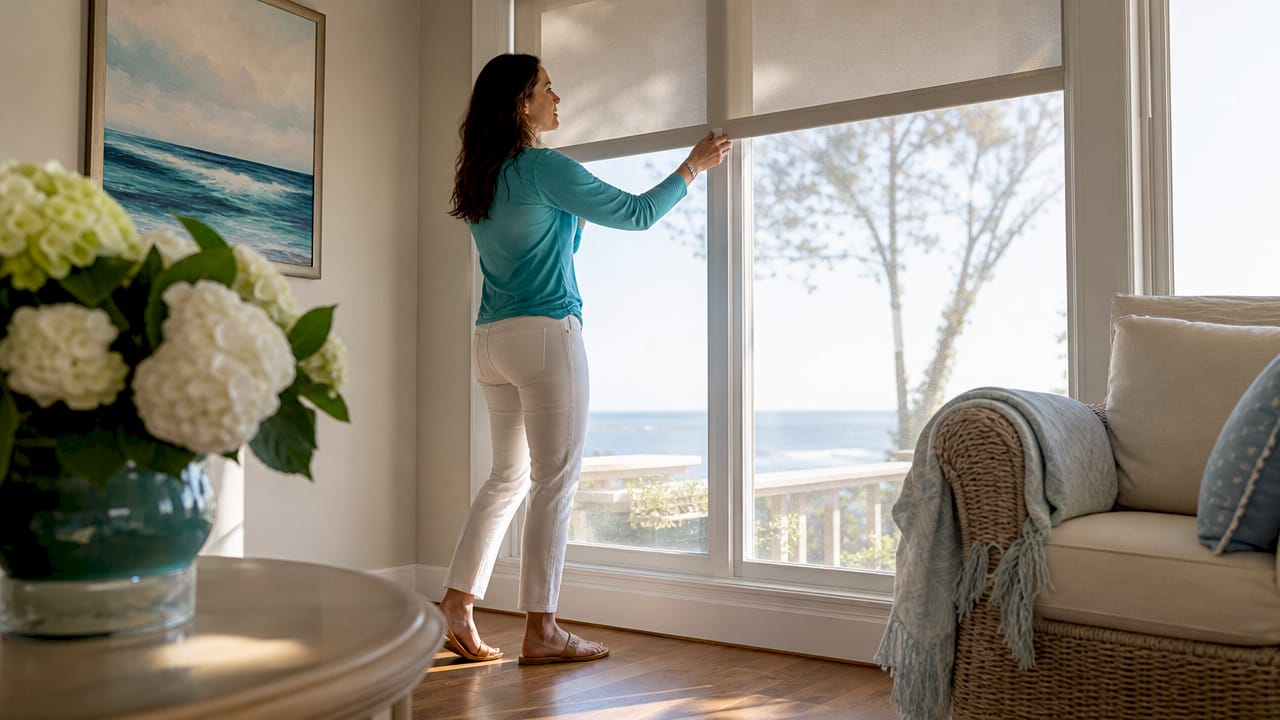
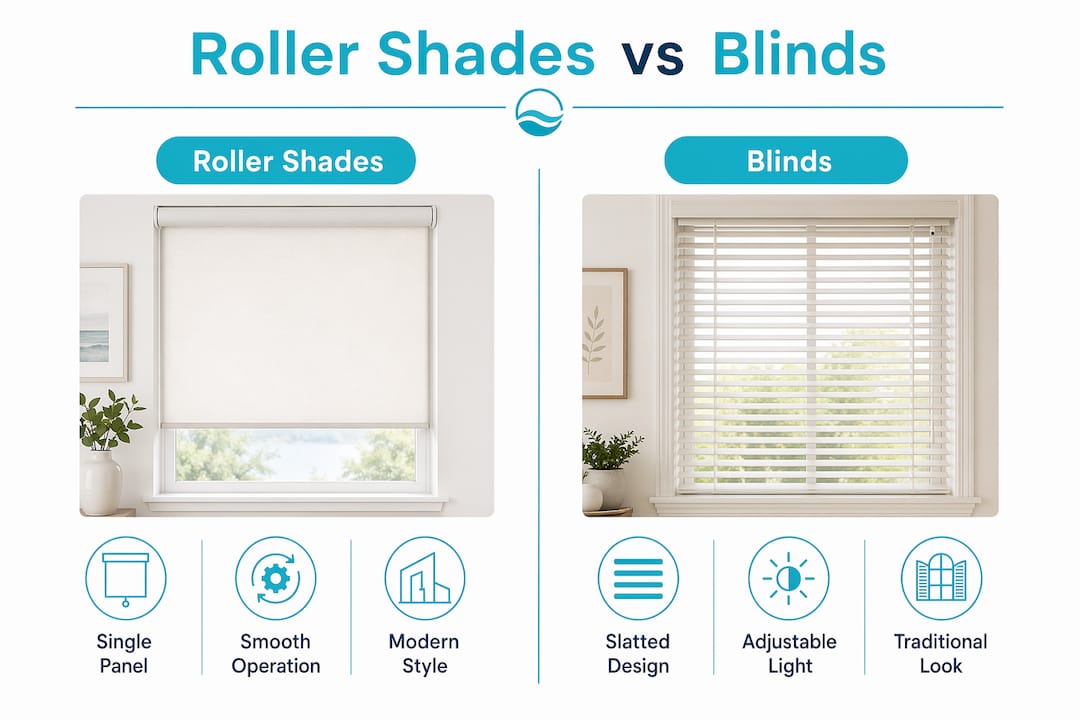
Roller shades are a single continuous fabric panel that rolls up and down on a tube, while blinds are window coverings made of individual slats that tilt open and closed. That structural difference is exactly how roller shades differ from blinds, and it drives every practical distinction between the two: how much light enters a room, how much privacy you get, how easy they are to clean, and how much they cost. Knowing which structure fits your space makes the difference between a window treatment you love and one you tolerate.
How do roller shades and blinds differ in light control?
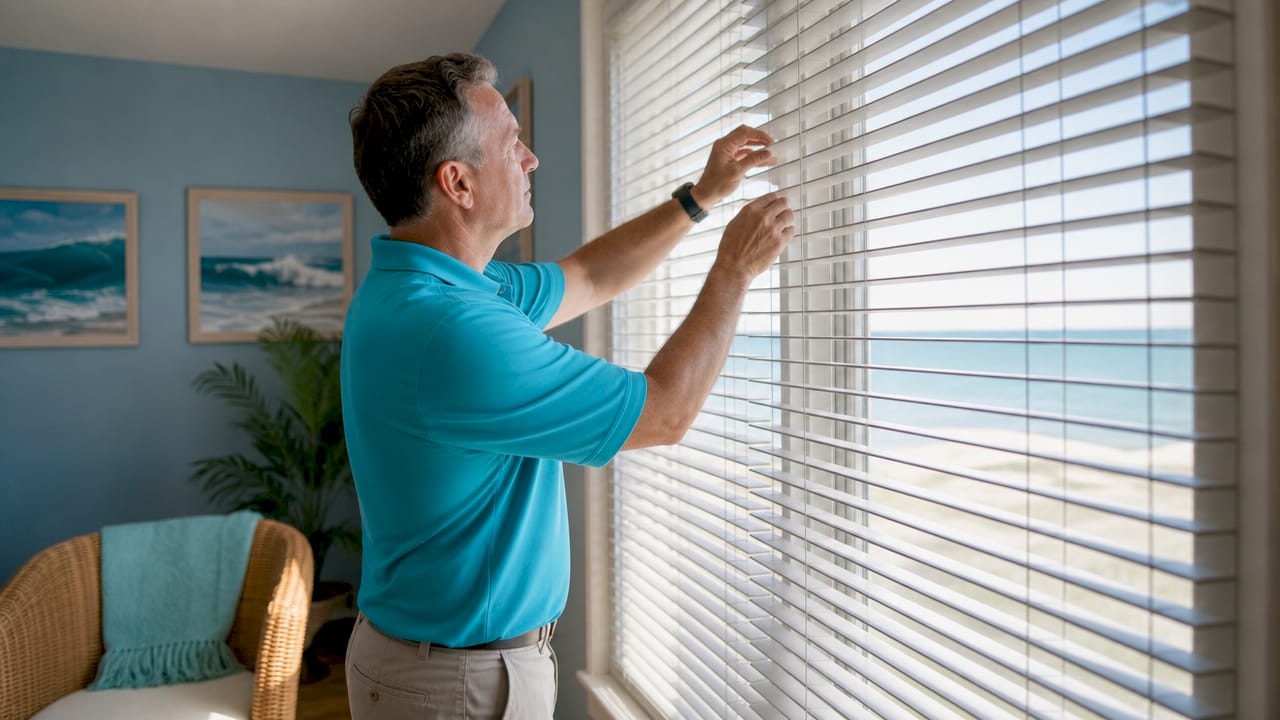
Blinds act like a manual dimmer switch for your room. You can tilt the slats to any angle, redirecting sunlight toward the ceiling to reduce glare, or angling them downward to darken the space. That granular control is the defining advantage of blinds over shades.
Roller shades work more like an on/off switch. You raise them to let light in or lower them to block it. The amount of light that enters depends entirely on the fabric you choose, not on any adjustable mechanism. Fabric opacity is the only variable: sheer fabrics diffuse light softly, light-filtering fabrics reduce glare while maintaining visibility, and blackout fabrics block nearly all incoming light.
Here is how the main fabric categories for roller shades break down:
Sheer: Softens and diffuses daylight. No meaningful privacy.
Light-filtering: Reduces glare and UV exposure while keeping the room bright.
Blackout: Blocks 95–99% of light through the fabric itself.
Solar: Reduces heat and UV rays while preserving the outdoor view.
Pro Tip: If you work from home and need to manage screen glare throughout the day without constantly adjusting your window treatment, blinds give you more moment-to-moment control. If you want a set-it-and-forget-it solution for a bedroom, a blackout roller shade is the cleaner choice.
One important caveat on blackout roller shades: standard blackout fabrics block 95–99% of light through the fabric, but light still leaks around the edges. True blackout requires side tracks or a cassette housing that seals the edges. That detail catches a lot of homeowners off guard.
What are the privacy advantages and limitations of roller shades vs blinds?
Blinds provide daytime privacy by distorting the interior view through the slats without requiring you to raise or lower them fully. You can keep blinds down and tilted to a position that blocks direct sightlines from outside while still letting diffused light in. That flexibility is genuinely useful in street-facing rooms.
Roller shades offer privacy based entirely on fabric opacity. A blackout shade gives you complete privacy when lowered. A sheer shade gives you almost none. The critical issue is nighttime: when interior lights are on, sheer and light-filtering roller shades can project silhouettes onto the fabric, making your movements visible from outside. Blinds with closed slats do not have this problem.
Key privacy considerations for homeowners and renters:
Blackout roller shades give full privacy day and night when lowered, but require side tracks for complete edge coverage.
Sheer roller shades offer no meaningful privacy after dark.
Blinds with closed slats block direct views effectively at any time of day.
Blinds with open or tilted slats distort but do not fully block exterior views.
Pro Tip: For a bedroom that faces a neighbor’s house, pair a blackout roller shade with a sheer curtain panel. You get full privacy at night and a softer look during the day without sacrificing either function.
Renters face a specific challenge here. The tilt function of blinds lets you manage privacy and glare without raising or lowering the treatment at all. That matters in a rental where you want to leave the window treatment in its original position as much as possible. For more detailed guidance on privacy-focused options, the best shades for privacy resource from Brandywineblinds covers the full range of fabric and product choices.
How do blinds and roller shades compare in style and customization?
Roller shades have a clean, flat profile that suits modern and minimalist interiors well. Their design versatility comes from the fabric itself: you can choose from UV-protective materials, eco-friendly textiles, noise-reducing fabrics, and hundreds of colors and patterns. A custom print on a roller shade is straightforward because the surface is one continuous piece of fabric. That makes them easy to tailor to a specific room’s palette.
Blinds have a more structured, architectural look. Wood and faux wood blinds suit traditional, farmhouse, or rustic interiors. Aluminum blinds work well in kitchens and bathrooms where moisture resistance matters. The slatted appearance adds visual texture, but it also limits how much you can customize the look beyond color and slat width.
Motorized and cordless options exist for both product types. Cordless blinds and roller shades are the standard choice for homes with children or pets, since looped cords present a safety risk. Motorized versions of both can be integrated with smart home systems, though motorized roller shades tend to be more widely available and easier to retrofit than motorized blinds.
Cellular shades are worth mentioning here as a shade variant: they offer better insulation than blinds due to their honeycomb structure, which traps air and reduces heat transfer. Roman shades and solar shades round out the shade category with their own distinct aesthetics and functional profiles.
What are the maintenance, durability, and cost differences?
Blinds are generally easier to clean. You wipe down individual slats with a damp cloth or a microfiber duster. Faux wood and aluminum blinds handle moisture well, making them practical in kitchens and bathrooms. Real wood blinds require more careful maintenance to avoid warping in humid conditions.
Roller shades require fabric-specific care. Most light-filtering and blackout fabrics can be spot-cleaned, but full washing is rarely an option without risking damage to the coating or structure. Dust accumulates on the fabric surface and can be harder to remove than on smooth slats. Over time, roller shade fabrics may show discoloration or wear at the bottom edge where the fabric is handled most.
Feature | Roller Shades | Blinds |
Cleaning method | Spot clean or light vacuuming | Wipe slats with damp cloth |
Moisture resistance | Depends on fabric | Aluminum and faux wood excel |
Durability | Fabric may wear or discolor | Slats can bend or break |
Cost | Generally higher | Generally lower |
Customization | High (fabrics, prints, textures) | Moderate (color, slat width) |
Blinds generally cost less than shades because they use fewer material options and simpler construction. Shades offer more fabric choices, trims, and specialty coatings, which pushes the price up. That said, custom roller shades from a local installer like Brandywineblinds cost significantly less than big-box or franchise equivalents because there is no corporate overhead built into the price.
Pro Tip: Renters who want a non-invasive installation should look at tension-mounted roller shades or cordless blinds with no-drill brackets. Both options work without permanent wall damage and can be removed cleanly at move-out.
Which window treatment should you choose: roller shades or blinds?
The right choice depends on how you use the room and what you need from the window. No single product wins across every situation.
Bedroom: A blackout roller shade is the strongest choice for sleep quality. Pair it with side tracks for true darkness.
Living room: Blinds give you more moment-to-moment light control throughout the day. Solar shades are a strong alternative if you want to preserve the view.
Home office: Blinds let you angle light toward the ceiling to reduce screen glare without darkening the room. That mid-position control is hard to replicate with a shade.
Kitchen or bathroom: Faux wood or aluminum blinds handle moisture better than most roller shade fabrics.
Rental apartment: Blinds’ tilt function gives you more flexibility without needing to raise or lower the treatment constantly.
Layering is also worth considering. A roller shade paired with a curtain panel gives you the clean look of a shade with the softness and added privacy of fabric drapery. Many homeowners use this combination in living rooms and primary bedrooms to get the best of both treatments. For rooms where light control is the top priority, Brandywineblinds offers a full range of light control and blackout options tailored to specific room needs.
Key Takeaways
Roller shades and blinds serve different needs: blinds give you adjustable, slat-based light control, while roller shades deliver cleaner aesthetics and fabric-driven privacy.
Point | Details |
Core structural difference | Roller shades use one fabric panel; blinds use individual tiltable slats. |
Light control flexibility | Blinds offer granular adjustment; roller shades rely on fabric opacity alone. |
Privacy at night | Blackout roller shades with side tracks outperform sheer shades and open blinds. |
Cost and maintenance | Blinds cost less and clean more easily; shades offer more customization. |
Best by room | Use blinds for offices and kitchens; use blackout shades for bedrooms. |
What 30 years of installations taught me about this choice
Most homeowners walk in focused on looks and walk out wishing they had asked more about function. The aesthetic question is easy to answer in a showroom. The functional question only reveals itself after six months of living with the treatment.
The most common regret I see is sheer roller shades in a street-facing bedroom. They look beautiful during the day. At night, with the lights on, the room becomes a shadow puppet theater for anyone walking by. The homeowner did not think about nighttime use when they chose the fabric. A light-filtering fabric or a blackout shade would have solved it without sacrificing the daytime look.
The second most common mistake is choosing real wood blinds for a bathroom or a kitchen above a sink. Wood and sustained moisture do not coexist well. Faux wood handles the same environment without warping, and it costs less. The visual difference is negligible from across the room.
The one thing I tell every homeowner: think about the room at its worst moment. The bedroom at 6 a.m. in summer. The home office at 2 p.m. with the sun hitting the screen directly. The living room during a movie in the afternoon. Design for those moments, and the treatment will serve you well for years.
— Dave
Custom window treatments from Brandywineblinds
Choosing between roller shades and blinds is easier when you have someone who knows both products well walking you through the options for your specific windows and rooms.

Brandywineblinds has been installing custom window treatments across Chester County, PA for over 30 years. Their local experts carry a full range of roller shades, blinds, motorized options, and specialty treatments, and they price their work without the franchise fees that inflate big-box costs. For homeowners and renters who want the right fit the first time, Brandywineblinds offers in-home consultations backed by a lifetime service warranty. Explore their privacy and light control options or browse their complete roller shades collection to see what fits your space.
FAQ
What is the main difference between roller shades and blinds?
Roller shades use a single fabric panel that rolls up and down on a tube. Blinds use individual slats that tilt to control light and privacy.
Are roller shades better than blinds for bedrooms?
Blackout roller shades are the stronger choice for bedrooms because they block more light than closed blind slats. Adding side tracks eliminates edge light leakage for true darkness.
Do roller shades provide enough privacy?
Privacy depends on the fabric. Blackout roller shades provide full privacy when lowered. Sheer roller shades offer little privacy, especially at night when interior lights are on.
Which is easier to clean: roller shades or blinds?
Blinds are easier to clean. You wipe each slat with a damp cloth or duster. Most roller shade fabrics require spot cleaning only and cannot be fully washed.
Can renters install roller shades or blinds without damaging walls?
Both are available in no-drill, tension-mounted versions. Cordless blinds with no-drill brackets and tension-mounted roller shades both install without permanent wall damage, making them practical rental options.
Recommended
Comments